

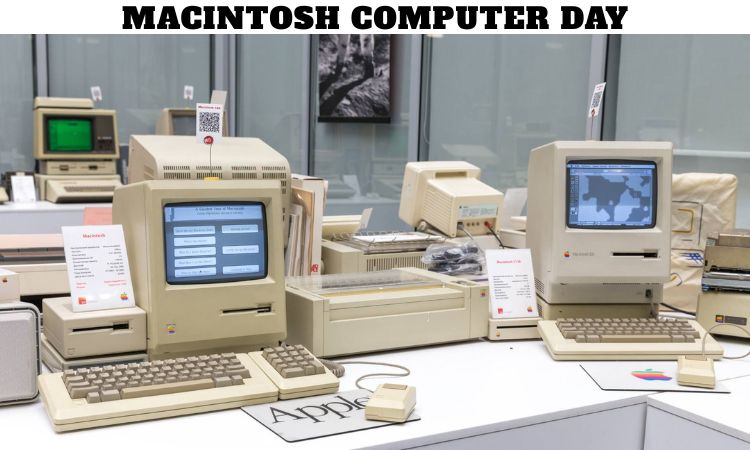
On January 24, we proudly observe Macintosh Computer Day, a global occasion that commemorates the launch of the original Apple Macintosh—a revolutionary personal computer that permanently reshaped the relationship between humans and technology. Introduced in 1984, the Macintosh was not merely a product; it was a bold statement that computing could be intuitive, visual, and accessible to everyday users. On this day, we reflect on the enduring legacy of the Macintosh and its continued influence on modern computing, creativity, and innovation.
The Historic Launch of the Macintosh
The original Macintosh 128K debuted on January 24, 1984, during a landmark presentation that changed the trajectory of the technology industry. Unlike its contemporaries, the Macintosh introduced a graphical user interface (GUI), a mouse-driven navigation system, and a friendly on-screen experience that eliminated the need for complex command lines. This breakthrough made personal computing approachable for individuals, educators, designers, and businesses alike.
The Macintosh was powered by a Motorola 68000 processor, featured a compact all-in-one design, and arrived with built-in software that demonstrated its graphical capabilities. From day one, it positioned Apple as a brand committed to user-centric design and creative empowerment.
Why Macintosh Changed the World of Computing?
The Macintosh redefined expectations for what a computer could be. We witnessed the beginning of a new era where design, usability, and aesthetics became as important as raw performance. The Macintosh popularized concepts that are now standard across devices worldwide, including:
Windows, icons, menus, and pointers
Drag-and-drop functionality
WYSIWYG (What You See Is What You Get) editing
Desktop publishing and digital typography
By prioritizing the user experience, the Macintosh set the foundation for modern operating systems and influenced competitors across the global technology landscape.
Evolution of the Macintosh Over the Decades
From the original Macintosh to today’s advanced Mac lineup, the platform has undergone remarkable evolution. We have seen the Macintosh transform through key milestones:
Power Macintosh era, delivering professional-grade performance
Transition to Intel processors, expanding compatibility, and speed
Introduction of macOS, refining stability, security, and elegance
Shift to Apple Silicon (M1, M2, and beyond), redefining power efficiency and performance
Each generation preserved the Macintosh philosophy—simplicity without compromise—while embracing cutting-edge innovation.
Macintosh and Creative Industries
Macintosh computers became the backbone of creative professionals across industries. Designers, video editors, musicians, writers, architects, and filmmakers adopted Macs for their reliability, color accuracy, and optimized creative software ecosystem. Tools such as Final Cut Pro, Logic Pro, and Adobe Creative Suite flourished on macOS, reinforcing the Macintosh as the preferred platform for artistic excellence.
The Macintosh empowered creativity by removing technical barriers, allowing ideas to flow seamlessly from imagination to execution.
Macintosh in Education and Business
Educational institutions worldwide embraced the Macintosh for its ease of use and minimal learning curve. We observed classrooms transformed by technology that encouraged exploration rather than intimidation. In business environments, Macintosh computers delivered stability, security, and productivity, especially in design-driven and innovation-focused organizations.
Today, Macs are widely used in startups, enterprises, and remote-work ecosystems, proving their versatility across professional landscapes.
The Role of macOS in Macintosh Success
A key factor behind the Macintosh’s longevity is macOS, Apple’s refined operating system. Known for its clean interface, robust security, and seamless integration with other Apple devices, macOS enhances productivity while maintaining elegance. Features such as Spotlight Search, Time Machine, iCloud synchronization, and Continuity exemplify how software and hardware work together harmoniously.
macOS continues to evolve, ensuring the Macintosh remains relevant in a fast-changing digital world.
Apple Silicon and the Future of Macintosh
The transition to Apple Silicon marked one of the most significant chapters in Macintosh history. By designing its own processors, Apple achieved unprecedented levels of performance per watt, silent operation, and extended battery life. Macs powered by Apple Silicon deliver exceptional speed for demanding tasks while maintaining energy efficiency, redefining expectations for personal computers.
This innovation secures the Macintosh’s position at the forefront of computing for years to come.
How is Macintosh Computer Day celebrated?
On Macintosh Computer Day, we celebrate by honoring innovation, creativity, and technological courage. Enthusiasts revisit classic Macintosh models, share stories of first Mac experiences, explore Apple’s design philosophy, and appreciate how the Macintosh shaped digital culture. It is a day to recognize how a single product launch changed not only an industry but also how people work, learn, and create.
The Cultural Impact of the Macintosh
Beyond technology, the Macintosh influenced popular culture, advertising, and brand storytelling. Apple’s iconic 1984 commercial symbolized rebellion against conformity and positioned the Macintosh as a tool for thinkers and creators. This cultural resonance continues today, with Macintosh computers representing innovation, individuality, and forward thinking.
Why Macintosh Still Matters Today?
In an age of rapid technological change, the Macintosh remains relevant because it stays true to its core principles: clarity, creativity, and human-centered design. Whether used for professional workloads or personal expression, the Macintosh delivers an experience that balances power with simplicity.
We recognize that the Macintosh is not just a computer—it is a philosophy that prioritizes people over complexity.
Conclusion: Honoring a Timeless Innovation
Macintosh Computer Day is a celebration of visionary thinking and technological progress. From its groundbreaking debut in 1984 to its modern evolution powered by Apple Silicon, the Macintosh continues to inspire generations of users worldwide. We honor the Macintosh for transforming personal computing, empowering creativity, and proving that technology can be both powerful and beautifully simple.