

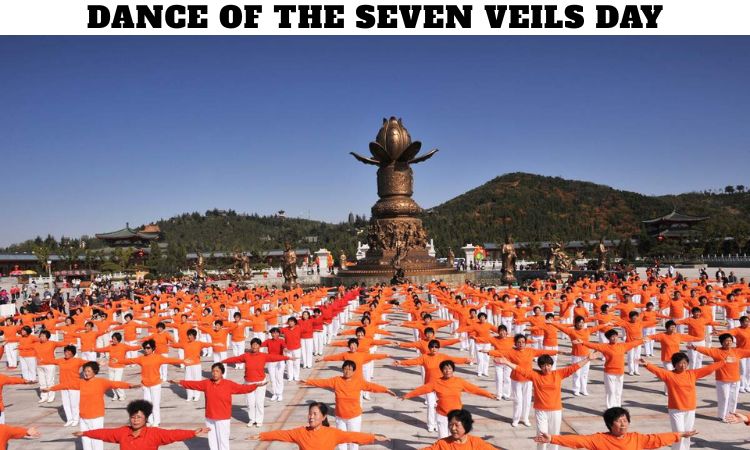
Dance of the Seven Veils Day is a celebration of mystery, movement, and the enduring power of artistic expression. Observed each year on January 22, this unique day honors one of the most iconic and symbolic dances in history—the Dance of the Seven Veils, a performance rich in mythology, drama, and cultural meaning. Rooted in ancient storytelling and later immortalized through opera, ballet, and modern dance, this day invites people around the world to explore the deeper layers of dance as both art and narrative.
Introduction to Dance of the Seven Veils Day
Dance of the Seven Veils Day commemorates a legendary dance associated with Salome, a biblical and historical figure whose story has inspired artists for centuries. More than just a sensual performance, the Dance of the Seven Veils represents revelation, transformation, power, and mystery. Each veil removed during the dance symbolizes the uncovering of truth, emotion, or identity.
Celebrated by dancers, artists, historians, and cultural enthusiasts, January 22 serves as a reminder of how dance transcends entertainment to become a language of symbolism and storytelling.
The Origin of the Dance of the Seven Veils
The Dance of the Seven Veils originates from the story of Salome, found in biblical texts and later expanded in literature and art. Salome was the daughter of Herodias and stepdaughter of King Herod Antipas. According to tradition, Salome performed a mesmerizing dance for King Herod, who was so captivated that he promised to grant her any wish.
Influenced by her mother, Salome asked for the head of John the Baptist. While early biblical accounts do not explicitly name the dance, later interpretations—especially in Oscar Wilde’s 1891 play “Salomé”—introduced the concept of the Dance of the Seven Veils, adding layers of sensuality, drama, and psychological depth.
Cultural and Artistic Evolution
Literature and Theatre
Oscar Wilde’s Salomé transformed the dance into a powerful dramatic centerpiece. Wilde used the dance as a metaphor for desire, manipulation, and control, giving it lasting cultural significance.
Opera
The most famous musical adaptation came from Richard Strauss’s 1905 opera “Salome.” In this version, the Dance of the Seven Veils becomes a climactic orchestral and visual moment. Strauss’s composition elevated the dance to an operatic spectacle, combining music, movement, and emotion unforgettably.
Ballet and Modern Dance
Over time, choreographers across the world adapted the dance into ballet, contemporary dance, and fusion styles, each interpreting the veils differently—sometimes as emotions, sometimes as societal constraints, and sometimes as stages of self-discovery.
Symbolism of the Seven Veils
One of the most fascinating aspects of the Dance of the Seven Veils is its symbolic depth. The number seven has long been associated with spiritual completeness and transformation. Each veil removed during the dance can symbolize:
Innocence
Desire
Power
Fear
Truth
Freedom
Revelation
Rather than a literal act of seduction, the dance is often interpreted as a journey of self-expression, where the performer sheds layers imposed by society, expectation, or fear.
Why is Dance of the Seven Veils Day celebrated?
Dance of the Seven Veils Day is not just about remembering a historical or fictional performance. It celebrates:
Artistic freedom
Expression through movement
The power of dance as storytelling
The fusion of history, myth, and performance
This day encourages people to explore how dance can communicate complex emotions without words and how ancient stories continue to influence modern creativity.
Modern Interpretations and Global Influence
Today, the Dance of the Seven Veils has found its way into various dance forms, including:
Contemporary dance
Belly dance and fusion styles
Theatrical performances
Performance art installations
Many dancers reinterpret the veils as personal barriers, using the dance as a metaphor for healing, empowerment, and identity. In this way, the dance has evolved beyond its original narrative to become a universal symbol of transformation.
How to Celebrate Dance of the Seven Veils Day?
There are many meaningful and creative ways to observe Dance of the Seven Veils Day on January 22:
1. Watch a Performance
Explore recorded operas, ballets, or modern dance performances inspired by the Dance of the Seven Veils. Each version offers a different artistic perspective.
2. Learn the History
Read about Salome, Oscar Wilde’s play, or Richard Strauss’s opera to understand the cultural roots of the dance.
3. Dance It Yourself
Whether professionally trained or not, try creating your own interpretation. You can use scarves, veils, or symbolic props to express emotions through movement.
4. Attend a Workshop or Class
Many dance schools and cultural organizations hold special workshops focused on expressive dance and storytelling.
5. Share on Social Media
Artists and dancers often share performances, artwork, or reflections using hashtags related to Dance of the Seven Veils Day to spread awareness and appreciation.
The Role of Women and Power in the Dance
The Dance of the Seven Veils has sparked ongoing discussions about female agency, power, and representation. While some interpretations focus on seduction, others emphasize Salome’s control over her destiny and her ability to command attention through art.
In modern feminist readings, the dance is seen as a reclamation of voice and autonomy, where movement becomes a form of resistance and self-definition rather than objectification.
Dance as Storytelling Without Words
One of the most important lessons of Dance of the Seven Veils Day is the reminder that dance is a universal language. Without a single spoken word, dancers can communicate longing, fear, strength, rebellion, and transformation.
This makes the Dance of the Seven Veils especially relevant today, as audiences seek deeper emotional connections through visual and performative art.
Educational and Artistic Significance
Dance educators and performers often use January 22 as an opportunity to discuss:
Symbolism in performance
Historical influences on modern dance
The emotional psychology of movement
Cross-cultural interpretations of storytelling through dance
By studying the Dance of the Seven Veils, students gain insight into how myth and movement intersect to create timeless art.
Relevance in Contemporary Culture
Even in today’s digital age, the Dance of the Seven Veils continues to inspire:
Fashion designers
Visual artists
Filmmakers
Performance artists
Its themes of revelation and identity resonate strongly in a world where people constantly negotiate between public image and private self.
Conclusion
Dance of the Seven Veils Day is more than a tribute to an ancient dance—it is a celebration of expression, symbolism, and the enduring power of movement. From its mythological origins to its modern reinterpretations, the Dance of the Seven Veils reminds us that art can challenge, inspire, and transform.