

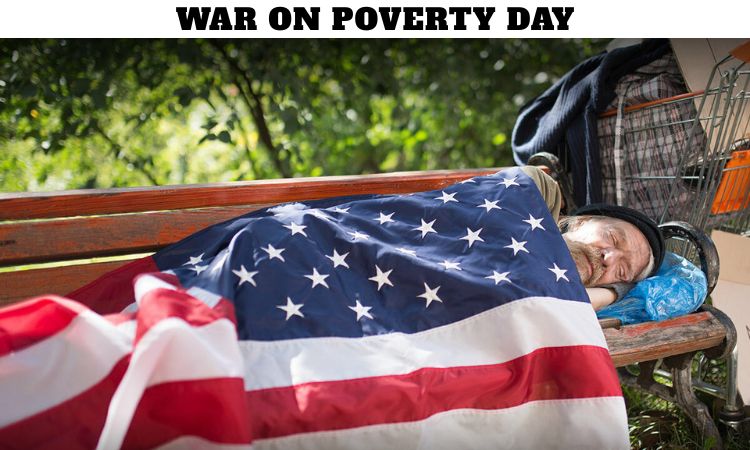
War on Poverty Day, observed annually on January 8, is a significant occasion dedicated to raising awareness about poverty, economic inequality, and social injustice. This day marks the launch of the War on Poverty initiative in the United States in 1964, when President Lyndon B. Johnson addressed Congress with a bold commitment to combat poverty at its roots. War on Poverty Day encourages societies worldwide to reflect on the causes of poverty, evaluate progress made, and renew collective efforts to build a more just and equitable world.
We observe this day not only as a historical milestone but also as a call to action. Poverty remains one of the most persistent global challenges, affecting millions of people across nations, cultures, and generations. War on Poverty Day reminds us that ending poverty requires sustained commitment, inclusive policies, and compassionate leadership.
The Historical Background of the War on Poverty
The War on Poverty officially began on January 8, 1964, when President Lyndon B. Johnson delivered his State of the Union Address to the U.S. Congress. In his speech, he declared an “unconditional war on poverty,” emphasizing that prosperity should be shared by all citizens, not limited to a privileged few.
This initiative led to the creation of landmark social programs such as Medicare, Medicaid, Head Start, Food Stamps (now SNAP), and Job Corps. These programs aimed to address poverty through education, healthcare, employment opportunities, and social security, laying the foundation for modern social welfare systems.
Understanding Poverty: Beyond Income
Poverty is not merely the absence of income; it is a complex and multidimensional issue.
Economic Poverty
Economic poverty refers to insufficient income to meet basic needs such as food, shelter, clothing, and healthcare. This form of poverty often leads to chronic insecurity and vulnerability.
Social Poverty
Social poverty includes a lack of access to education, healthcare, clean water, and sanitation. It also encompasses social exclusion, discrimination, and limited opportunities for upward mobility.
Intergenerational Poverty
Poverty often passes from one generation to the next. Children born into impoverished conditions face barriers that limit their chances of escaping poverty, including inadequate education and healthcare.
War on Poverty Day emphasizes the need to address all dimensions of poverty, not just financial deprivation.
Why War on Poverty Day Still Matters Today?
Despite decades of progress, poverty remains a pressing issue. Economic disparities have widened in many regions due to globalization, technological change, and unequal access to resources.
Global Poverty
According to international development organizations, millions of people worldwide still live below the poverty line, struggling for basic survival. Conflict, climate change, and economic instability continue to push vulnerable populations into poverty.
Poverty in Developed Nations
Poverty is not limited to developing countries. Even in wealthy nations, millions face housing insecurity, food scarcity, and limited access to healthcare. War on Poverty Day reminds us that poverty exists in many forms and places.
Key Achievements of the War on Poverty
The War on Poverty initiative brought significant progress:
Reduction in elderly poverty through Social Security and Medicare
Improved access to education for disadvantaged children
Expanded healthcare coverage for low-income populations
Enhanced food security through nutrition assistance programs
These achievements demonstrate that policy-driven interventions can meaningfully reduce poverty when implemented effectively.
Challenges and Criticisms
While the War on Poverty achieved notable successes, it also faced criticism.
Uneven Impact
Some programs did not reach all communities equally, leaving gaps in rural and marginalized areas.
Structural Inequality
Critics argue that poverty cannot be eliminated without addressing systemic issues such as wage stagnation, racial inequality, and unequal education systems.
Changing Economic Landscape
Modern economies face new challenges, including automation and the gig economy, which require updated strategies to combat poverty effectively.
War on Poverty Day encourages honest evaluation of past efforts to inform future solutions.
The Role of Education in Ending Poverty
Education remains one of the most powerful tools in the fight against poverty.
Early Childhood Education
Programs like Head Start have shown that early education improves long-term outcomes in health, income, and social mobility.
Access to Higher Education
Affordable and accessible higher education opens pathways to better-paying jobs and economic stability.
Skill Development and Vocational Training
Job training programs equip individuals with skills needed in evolving job markets, reducing unemployment and underemployment.
Healthcare and Poverty Reduction
Health and poverty are deeply interconnected.
Poor health can lead to job loss and financial strain
Poverty limits access to quality healthcare
Preventive care reduces long-term healthcare costs
Programs established during the War on Poverty significantly improved healthcare access, highlighting the importance of universal and affordable healthcare in poverty reduction.
Employment and Fair Wages
Sustainable employment is central to ending poverty.
Living Wages
Ensuring fair wages allows workers to meet basic needs without reliance on assistance programs.
Job Creation
Investments in infrastructure, green energy, and technology create employment opportunities that strengthen economies.
Worker Protections
Labor rights, job security, and benefits protect workers from economic shocks and instability.
The Global Perspective on the War on Poverty
While War on Poverty Day originates in the United States, its message resonates globally.
International Cooperation
Global organizations and governments collaborate to reduce poverty through development aid, education, and healthcare initiatives.
Sustainable Development Goals (SDGs)
The United Nations’ Sustainable Development Goal 1: No Poverty aligns closely with the principles of the War on Poverty, aiming to eradicate extreme poverty worldwide.
How Individuals Can Contribute?
Ending poverty is a collective responsibility.
Advocacy and Awareness
Raising awareness and supporting policies that promote social equity helps drive systemic change.
Community Engagement
Volunteering with local organizations supports those in need and strengthens community resilience.
Ethical Consumption
Supporting fair-trade products and responsible businesses contributes to more equitable economic systems.
The Importance of Data and Policy Innovation
Modern poverty reduction efforts rely on data-driven strategies.
Targeted social programs improve efficiency
Evidence-based policymaking ensures accountability
Technology enhances service delivery and access
Innovation plays a crucial role in adapting poverty reduction strategies to contemporary challenges.
Why War on Poverty Day Is a Call to Action?
War on Poverty Day is not only about remembrance; it is about responsibility. It challenges governments, organizations, and individuals to recommit to the values of dignity, opportunity, and fairness.
This observance reminds us that poverty is not inevitable. With informed policies, social investment, and collective will, poverty can be reduced and ultimately eliminated.
Conclusion: Renewing the Commitment on January 8
War on Poverty Day stands as a powerful reminder of humanity’s ongoing struggle against economic inequality and social injustice. It honors past efforts while urging renewed commitment to inclusive growth and shared prosperity.