

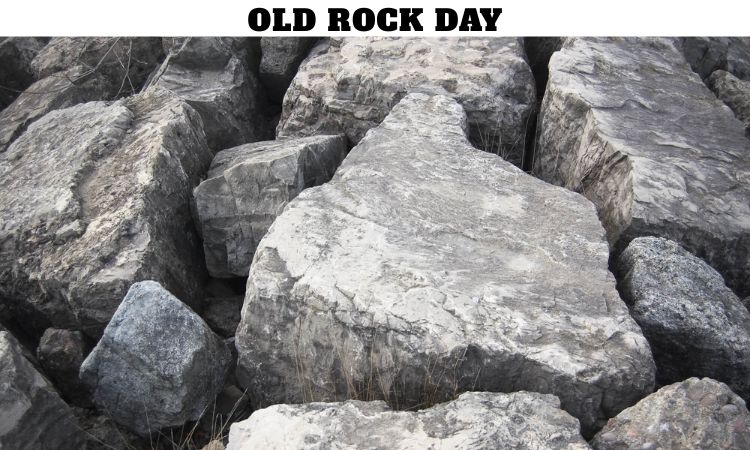
Old Rock Day, observed every year on January 7, is a unique and fascinating celebration dedicated to the ancient rocks that form the very foundation of our planet. These rocks are silent witnesses to Earth’s long and dramatic history, carrying stories that span billions of years. On Old Rock Day, we pause to appreciate not only their physical presence but also their scientific, cultural, and educational significance.
Rocks are often overlooked in daily life, yet they shape landscapes, influence ecosystems, and provide invaluable insights into Earth’s past. Old Rock Day encourages us to look beyond the surface and recognize the deep time recorded within these natural formations.
What is Old Rock Day, and why does it matter?
Old Rock Day is a day set aside to recognize ancient geological formations, fossils, and stones that have survived immense geological processes such as volcanic eruptions, tectonic shifts, erosion, and climatic changes. These rocks serve as natural archives, preserving evidence of Earth’s evolution long before human history began.
The importance of Old Rock Day lies in raising awareness about geology, earth science, and conservation. By understanding old rocks, we gain knowledge about climate change, continental drift, and the origins of life itself.
The Science Behind Old Rocks
Old rocks are typically classified into three main types, each playing a vital role in understanding Earth’s geological story.
Igneous Rocks
Formed from cooled magma or lava, igneous rocks such as granite and basalt are among the oldest rocks on Earth. They provide clues about volcanic activity and the formation of Earth’s crust.
Sedimentary Rocks
These rocks form from layers of sediment compressed over time. Sandstone, limestone, and shale often contain fossils, making them essential for studying ancient life and environments.
Metamorphic Rocks
Created when existing rocks undergo intense heat and pressure, metamorphic rocks like marble and slate reveal information about tectonic forces and deep Earth processes.
Old Rock Day highlights how each rock type contributes to our understanding of planetary history.
Some of the Oldest Rocks on Earth
Earth is approximately 4.5 billion years old, and some rocks date back nearly that far. These ancient stones are invaluable to science and human knowledge.
Acasta Gneiss (Canada): Estimated to be over 4 billion years old, one of the oldest known rocks on Earth
Greenstone Belts (South Africa and Australia): Rich in minerals and evidence of early life
Jack Hills Zircons (Australia): Microscopic crystals dating back 4.4 billion years
Old Rock Day draws attention to these geological treasures and their role in uncovering Earth’s earliest chapters.
Old Rocks and the Story of Time
Rocks function as natural timekeepers. Through techniques such as radiometric dating, scientists determine the age of rocks and reconstruct the timeline of Earth’s development. These studies help explain how continents formed, oceans evolved, and climates changed over millions of years.
Old Rock Day reminds us that time operates on a scale far greater than human lifespans, offering perspective on our place in the natural world.
Cultural and Historical Significance of Rocks
Beyond science, rocks have deep cultural, spiritual, and historical value. Ancient civilizations used stones for tools, monuments, and sacred sites.
Stonehenge in England
The pyramids of Egypt
Rock-cut temples and caves across Asia
These structures demonstrate how humanity has long relied on old rocks for survival, expression, and belief. Old Rock Day celebrates this enduring relationship between humans and stone.
Rocks as Teachers: Educational Importance
Old rocks are essential tools for education. Schools, universities, and museums use geological specimens to teach students about Earth science, environmental change, and sustainability.
On Old Rock Day, educators often encourage hands-on learning through:
Rock and mineral identification
Fossil studies
Field trips to geological sites
Such activities inspire curiosity and respect for the natural world.
Old Rocks and Natural Landscapes
Many of the world’s most breathtaking landscapes are shaped by ancient rocks. Mountains, canyons, cliffs, and coastlines owe their existence to geological processes acting over immense periods.
Examples include:
The Grand Canyon
Uluru (Ayers Rock)
The Himalayas
Old Rock Day invites us to appreciate these formations not just for their beauty, but for the deep history they represent.
Environmental and Conservation Perspective
Old rocks play a critical role in modern environmental science. They help scientists understand past climate patterns, natural disasters, and ecological shifts. This information is essential for predicting future environmental changes.
Preserving geological sites is crucial. Mining, construction, and pollution can damage irreplaceable rock formations. Old Rock Day promotes responsible stewardship and conservation of geological heritage.
How to Celebrate Old Rock Day?
Old Rock Day can be celebrated in simple yet meaningful ways.
Explore Nature
Visit a local park, trail, or geological site and observe rock formations closely.
Learn and Research
Read about geology, watch documentaries, or explore virtual museum collections.
Start a Rock Collection
Collect stones responsibly and learn to identify their types and origins.
Visit a Museum
Natural history museums often feature impressive collections of ancient rocks and fossils.
Celebrating Old Rock Day is about curiosity, learning, and appreciation.
Old Rocks in Modern Life
Despite their ancient origins, rocks remain vital in modern society. They are used in construction, technology, art, and industry. From marble sculptures to silicon chips, old rocks continue to shape human progress.
Old Rock Day highlights the connection between Earth’s ancient materials and contemporary life.
Why Old Rock Day Still Matters Today?
In a fast-paced, technology-driven world, Old Rock Day encourages reflection and patience. Rocks remind us that change is constant but often slow and deliberate. They teach resilience, endurance, and the value of long-term thinking.
By honoring old rocks, we also honor the planet that sustains us.
Conclusion: Reflecting on Old Rock Day
Old Rock Day is more than a niche observance; it is a celebration of Earth’s deep history and the foundations of life itself. Ancient rocks connect science, culture, and nature, offering lessons that remain relevant today.