
Every year on January 4, the world observes World Braille Day, a global awareness day dedicated to recognizing the importance of Braille as a vital tool for communication, education, and independence for people who are blind or visually impaired. More than just a system of raised dots, Braille represents freedom, dignity, and equal access to information. World Braille Day reminds us that literacy is a fundamental human right and that accessibility is essential for building an inclusive society.
What Is World Braille Day?
World Braille Day is observed annually on January 4 to honor the birth anniversary of Louis Braille, the inventor of the Braille writing system. The day highlights the significance of Braille in enabling blind and visually impaired individuals to read, write, learn, and participate fully in society.
Recognized officially by the United Nations, World Braille Day serves as a platform to promote awareness about the importance of accessible communication and to advocate for the rights of people with visual disabilities worldwide.
Who Was Louis Braille?
Louis Braille was born on January 4, 1809, in Coupvray, France. At a young age, he lost his eyesight due to an accident and subsequent infection. Despite this life-changing challenge, Louis Braille showed exceptional determination and intelligence.
As a teenager, he developed the Braille system by adapting a tactile military code. His goal was to create a simple, efficient method that allowed blind individuals to read and write independently. His invention revolutionized education for the visually impaired and continues to impact millions of lives today. World Braille Day celebrates his legacy and vision.
Understanding the Braille System
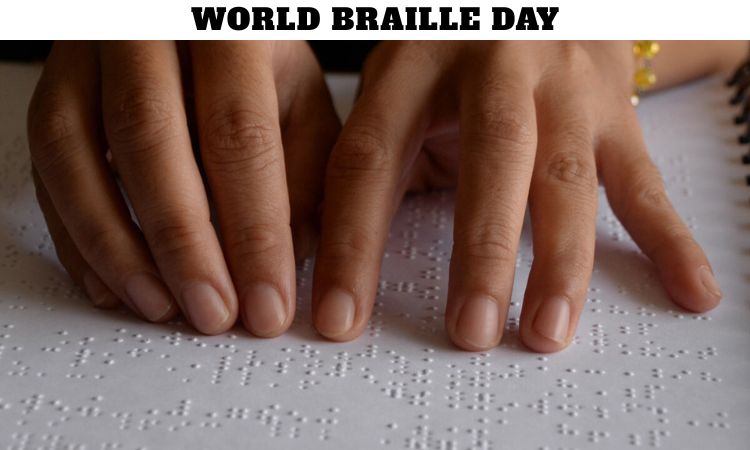
Braille is a tactile writing system made up of patterns of raised dots arranged in cells of six dots. Each cell represents a letter, number, punctuation mark, or even entire words in contracted forms.
The beauty of Braille lies in its versatility. It is used for:
Reading books and educational materials
Writing notes and documents
Labeling everyday items
Accessing public information such as elevators, signs, and currency
On World Braille Day, people are encouraged to learn about how Braille works and why it remains essential in the digital age.
Why World Braille Day Is Important
World Braille Day plays a crucial role in promoting equality and inclusion. Here’s why the day matters:
1. Promoting Literacy
Literacy empowers individuals to gain knowledge, express ideas, and build independence. Braille literacy is directly linked to better education and employment opportunities for visually impaired people.
2. Raising Awareness
Many people are unaware of the challenges faced by those with visual impairments. World Braille Day helps educate society about accessibility needs and inclusive practices.
3. Advocating Human Rights
Access to information is a basic human right. This day reinforces the importance of providing information in accessible formats for everyone.
4. Encouraging Inclusion
By recognizing Braille, the world acknowledges the value of diversity and the importance of designing environments that include all abilities.
Braille in Education
Education is one of the most powerful areas where Braille makes a difference. For visually impaired students, Braille is not just a learning tool—it is the foundation of literacy.
Students who learn Braille are more likely to develop strong reading and writing skills, perform better academically, and pursue higher education. World Braille Day highlights the need for accessible textbooks, trained teachers, and inclusive learning environments to ensure equal educational opportunities.
Braille in Everyday Life
Braille extends far beyond classrooms. It is an essential part of daily life for many individuals with visual impairments. From medication labels and restaurant menus to ATM keypads and public signage, Braille enhances safety and independence.
On World Braille Day, organizations and communities are encouraged to assess how accessible their spaces are and take steps to include Braille in public infrastructure.
Braille in the Digital Age
With the rise of digital technology, some people mistakenly believe Braille is becoming obsolete. In reality, technology has expanded Braille’s reach.
Modern innovations include:
Refreshable Braille displays
Braille e-readers
Screen readers paired with Braille keyboards
Digital Braille libraries
These tools allow users to access online content, emails, and digital documents in Braille. World Braille Day emphasizes that technology and Braille work together to enhance accessibility.
Global Recognition of World Braille Day
The United Nations officially recognizes World Braille Day, reinforcing its global importance. Governments, NGOs, educational institutions, and disability rights organizations around the world observe the day through events, workshops, and awareness campaigns.
This international recognition sends a powerful message: inclusion and accessibility are not optional—they are essential.
Challenges Faced by the Visually Impaired Community
Despite progress, many challenges remain. Limited access to Braille education, lack of affordable assistive technology, and insufficient public awareness continue to create barriers.
World Braille Day draws attention to these challenges and encourages policymakers, educators, and communities to work together to create inclusive solutions.
How Individuals Can Support World Braille Day?
Everyone can play a role in promoting the message of World Braille Day. Here are a few meaningful ways to get involved:
Learn the basics of Braille
Support organizations that promote accessibility
Advocate for inclusive design in public spaces
Share information about World Braille Day on social media
Encourage schools and workplaces to adopt accessible practices
Small actions can lead to significant change.
Braille as a Symbol of Empowerment
Braille is more than a reading system—it is a symbol of empowerment. It enables individuals to pursue education, careers, and creative expression with confidence.
On World Braille Day, we celebrate the resilience of the visually impaired community and recognize the role of Braille in promoting self-reliance and dignity.
The Future of Braille
The future of Braille is closely tied to innovation and advocacy. As technology advances, new tools will continue to make Braille more accessible and affordable.
However, awareness and education remain key. World Braille Day serves as a reminder that preserving and promoting Braille is a shared responsibility.
Why World Braille Day Matters to Society?
An inclusive society benefits everyone. When information is accessible, communities become stronger, more diverse, and more compassionate.
World Braille Day encourages us to rethink how we communicate and to ensure that no one is left behind due to a lack of accessibility.
Conclusion
World Braille Day – January 4 is a powerful reminder of the importance of accessibility, literacy, and human rights. By honoring the legacy of Louis Braille, this day highlights how a simple yet brilliant invention transformed millions of lives.