

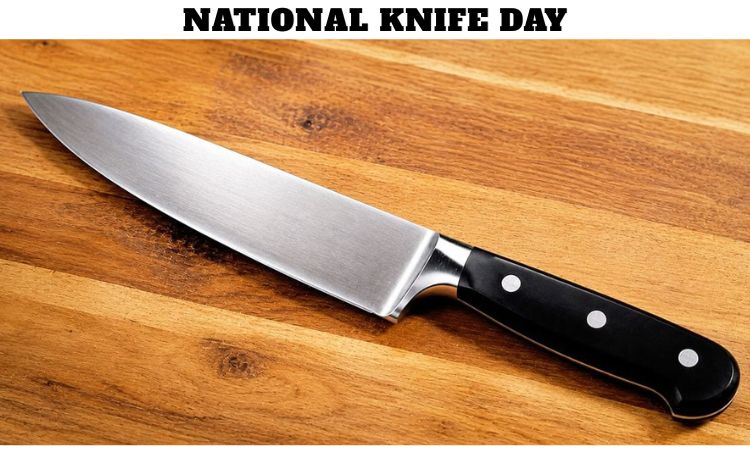
What Is National Knife Day?
National Knife Day is observed every year on August 24 as a day that recognizes the long history, craftsmanship, usefulness, and cultural significance of knives. Knives are among the oldest and most versatile tools created by humans. Over thousands of years, they have evolved from simple cutting implements made from stone and bone into highly specialized tools used in kitchens, workshops, outdoor activities, trades, and everyday tasks.
The observance provides an opportunity to appreciate knives primarily as tools and examples of craftsmanship. From traditional handcrafted blades to modern kitchen knives, the day highlights the skill involved in designing, producing, maintaining, and using these tools responsibly.
National Knife Day can also encourage people to learn about knife history, different types of knives, traditional blade-making techniques, and the importance of safety. Because knives can cause serious injuries when handled improperly, responsible ownership and safe handling should always be part of any discussion surrounding the day.
When Is National Knife Day Celebrated?
National Knife Day is celebrated on August 24 every year. The date remains the same, although the day of the week changes from year to year.
August 24 gives knife enthusiasts, collectors, chefs, craftspeople, historians, and curious learners a chance to explore the development of knives and their place in human history. Some people observe the day by learning about traditional blades, visiting museums or craft demonstrations, discussing kitchen tools, or simply appreciating a well-designed knife.
The occasion is particularly interesting because knives have played an important role in countless aspects of human life. They have helped people prepare food, create objects, perform trades, and complete practical household tasks.
Why Are Knives Important in Human History?
Knives are important in human history because cutting tools helped early communities process food, work with materials, and perform everyday tasks. Early knives were made from materials such as stone, bone, wood, and shells before humans developed increasingly sophisticated metalworking techniques.
The development of metalworking transformed knife production. Copper, bronze, iron, and eventually steel allowed craftspeople to create stronger and more durable blades. Different societies developed their own approaches to blade design, decoration, handles, and manufacturing.
Knives also became associated with particular professions and traditions. Farmers, cooks, craftspeople, hunters, sailors, and tradespeople developed tools suited to their specific requirements.
Today, knives remain essential in many professions. A chef depends on carefully designed kitchen knives, while craftspeople may use specialized cutting tools for particular materials. This long history demonstrates why knives can be viewed as significant examples of human ingenuity and craftsmanship.
How Did Knives Evolve Over Time?
The evolution of knives reflects the development of technology and human craftsmanship. The earliest cutting tools were relatively simple and were created by shaping naturally available materials. Stone tools could produce sharp edges suitable for cutting and processing materials.
As humans learned to work with metals, knife construction became more advanced. Bronze provided greater durability than many earlier materials, while iron and steel eventually allowed for stronger and more reliable blades.
Modern manufacturing introduced additional changes. Industrial processes made it possible to produce knives in large quantities while maintaining consistent dimensions and quality. At the same time, traditional craftspeople continued making handmade knives using techniques passed down through generations.
Today, knives are available in an enormous range of designs. Kitchen knives, utility knives, craft knives, outdoor tools, and professional cutting instruments can all have different shapes and purposes. Materials have also advanced, with modern stainless steels, high-carbon steels, ceramics, and engineered handle materials offering different characteristics.
What Are the Most Common Types of Knives?
Knives come in many forms because different tasks require different designs. Kitchen knives are among the most familiar types. Chef’s knives, paring knives, bread knives, carving knives, and utility knives are commonly used for food preparation.
A chef’s knife is a versatile kitchen tool designed for a wide range of food-preparation tasks. A paring knife is smaller and useful for detailed kitchen work, while a bread knife generally has a serrated edge designed for cutting through crusty bread without excessive crushing.
Outside the kitchen, people may encounter utility and craft knives designed for specific practical jobs. Professional trades can also involve specialized cutting tools.
The important point is that every knife should be selected according to its intended purpose and used responsibly. A knife designed for one task may not be suitable for another.
Why Is Knife Craftsmanship Worth Appreciating?
Knife craftsmanship combines practical engineering with traditional artistry. A well-made knife requires attention to materials, balance, handle construction, edge geometry, durability, and overall design.
Traditional knife-making can involve techniques such as forging, grinding, polishing, and careful finishing. Experienced makers may spend considerable time creating a single handmade knife.
Modern knife production can be equally sophisticated. Manufacturers use advanced machinery and carefully engineered materials to create products designed for specific applications.
National Knife Day provides an opportunity to recognize both approaches. Handmade knives demonstrate the value of traditional craftsmanship, while modern knives show how technology can improve consistency, performance, and durability.
How Can People Celebrate National Knife Day Safely?
There are many safe ways to observe National Knife Day without treating knives as weapons. Cooking is one of the simplest options. People can prepare a favorite recipe while learning about the different kitchen knives used in food preparation.
Another option is to learn about the history of blade-making. Books, museums, historical exhibits, and reputable educational resources can provide fascinating information about how cutting tools developed across different civilizations.
People can also appreciate knife craftsmanship through demonstrations or displays conducted by qualified professionals. Collectors may organize displays of historical or culinary knives while following all applicable laws and safety practices.
For families, the day can become an educational opportunity. Parents can teach children that knives are tools requiring careful adult supervision and responsible handling. Younger children should not be given access to sharp knives without appropriate supervision and age-appropriate guidance.
What Safety Rules Should Be Followed When Using Knives?
Knife safety should always come before convenience. Knives should be used only for their intended purpose and handled with attention and care.
A suitable cutting surface can help provide stability during food preparation. Users should keep their workspace organized and avoid distractions. Knives should be stored securely when they are not being used, particularly in homes with children.
A knife should never be treated as a toy or used recklessly. People should avoid attempting tasks for which a knife is not designed. Damaged or poorly maintained knives should also be handled carefully and repaired or replaced appropriately.
When preparing food, people should follow established kitchen-safety practices and use appropriate cutting techniques. Anyone who is inexperienced should consider learning from a qualified cooking instructor rather than experimenting with potentially dangerous techniques.
What Makes a Good Kitchen Knife?
A good kitchen knife should match the user’s needs, cooking habits, and comfort level. Sharpness is important, but a knife should also be comfortable to hold and appropriate for the intended task.
The quality of the blade material, handle, construction, balance, and maintenance requirements can all affect the overall experience. A professional chef may prefer a particular type of steel or blade profile, while a home cook may prioritize comfort and ease of maintenance.
Price does not automatically determine whether a knife is suitable. A reasonably priced knife that fits a person’s cooking style can be more useful than an expensive knife that is uncomfortable or difficult to maintain.
Proper cleaning, storage, and maintenance can also help extend the useful life of kitchen knives.
What Are Some Interesting Facts About Knives?
Knives have a fascinating history that stretches back thousands of years. Early cutting tools were created long before modern metalworking existed.
Different cultures developed distinctive styles of knives based on their available materials, technology, occupations, and culinary traditions. Some knives became strongly associated with particular regions or professions.
Kitchen knives are also highly specialized. A knife designed for bread is constructed differently from one designed for delicate food preparation. This specialization illustrates how tool design evolves in response to practical needs.
Knife-making is also an important traditional craft in many parts of the world. Some makers continue to use techniques that have been practiced for generations, while others combine traditional methods with modern technology.
Why Does National Knife Day Still Matter Today?
National Knife Day remains relevant because knives continue to be useful everyday tools. Although technology has changed many aspects of modern life, the basic need to cut, prepare, shape, and process materials has not disappeared.
The day also encourages appreciation for craftsmanship. A knife may appear to be a simple object, but its design can involve metallurgy, engineering, ergonomics, manufacturing, and artistic skill.
Perhaps most importantly, the observance offers a chance to promote responsible attitudes toward knives. Understanding their history and usefulness should go hand in hand with recognizing their potential to cause injury when used carelessly.
National Knife Day can therefore be viewed as a celebration of tools, craftsmanship, history, and responsible use rather than simply a celebration of blades.
How Can National Knife Day Be Celebrated at Home?
Celebrating National Knife Day at home can be simple and educational. Cooking a favorite meal is an easy way to appreciate the importance of knives in everyday life. Families can also discuss how kitchen tools have changed over the years.
Another idea is to research the history of traditional knives from different cultures. People interested in craftsmanship can watch demonstrations from established artisans or learn about metallurgy and traditional forging from reputable educational sources.
A kitchen-knife organization session can also be useful. People can check that their knives are stored safely, clean their kitchen tools according to manufacturer instructions, and make sure damaged items are removed from use.
The best celebrations focus on education, appreciation, craftsmanship, and safety.
What Is the Best Message for National Knife Day?
A meaningful National Knife Day message can focus on the idea that useful tools deserve respect. Knives have been part of human civilization for thousands of years, helping people prepare food, work with materials, and develop countless trades and crafts.
National Knife Day is an opportunity to appreciate the history behind these tools while remembering that responsible use is essential. Whether someone is a professional chef, craftsperson, collector, historian, or simply a home cook, the day can provide a reason to learn something new about knife design and craftsmanship.
National Knife Day on August 24 is a reminder that even an everyday tool can have a remarkable history.
Frequently Asked Questions (FAQs)
1. When is National Knife Day celebrated?
National Knife Day is observed annually on August 24.
2. What is National Knife Day?
National Knife Day is an observance that recognizes the history, craftsmanship, usefulness, and cultural importance of knives as tools.
3. Why are knives important?
Knives have been used for thousands of years for food preparation, crafting, manufacturing, and numerous practical tasks.
4. How can I celebrate National Knife Day?
You can celebrate by cooking, learning about knife history, exploring traditional craftsmanship, visiting an educational exhibition, or learning about responsible knife safety.
5. Are kitchen knives included in National Knife Day?
Yes. Kitchen knives are among the most common and practical types of knives and are an important part of everyday life.
6. What are some common kitchen knives?
Common kitchen knives include chef’s knives, paring knives, bread knives, utility knives, and carving knives.
7. Is National Knife Day a public holiday?
National Knife Day is generally recognized as an observance rather than a federal public holiday.
8. Why is knife safety important?
Knives have sharp edges and can cause serious injuries when used improperly. Safe handling, appropriate storage, and responsible use are essential.
9. Can children participate in National Knife Day activities?
Children can participate in educational activities with appropriate adult supervision. Sharp knives should be kept away from children unless an adult is providing suitable supervision and instruction.
10. What is the main purpose of National Knife Day?
The day provides an opportunity to appreciate the history, craftsmanship, practical value, and responsible use of knives.