
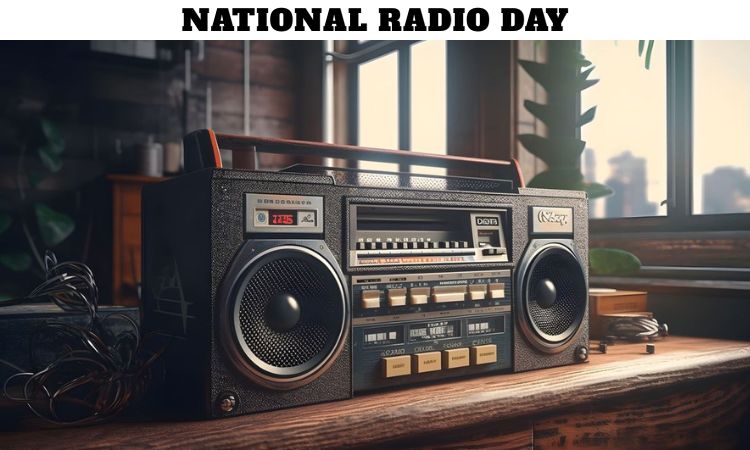
National Radio Day is observed every year on August 20 to celebrate radio and its remarkable contribution to communication, entertainment, education, news, and community connection. Although modern technology has introduced podcasts, streaming platforms, social media, and digital broadcasting, radio continues to hold an important place in everyday life.
Radio has a unique ability to reach people quickly and conveniently. A listener can enjoy music, follow the news, learn about current events, listen to sports commentary, or hear discussions while driving, working, cooking, or relaxing. Unlike many forms of media that require a screen and an internet connection, traditional radio can remain accessible in many situations.
National Radio Day provides an opportunity to recognize broadcasters, radio presenters, journalists, technicians, producers, musicians, and everyone who has helped radio remain an influential medium. It is also a day for listeners to appreciate the familiar voices, programs, songs, stories, and conversations that have made radio part of daily life for generations.
What Is National Radio Day?
National Radio Day is a day dedicated to recognizing the importance and influence of radio. Celebrated annually on August 20, the occasion encourages people to reflect on how radio has changed communication and entertainment over the years.
Radio transformed the way people received information. Before television and the internet became common, radio was one of the fastest ways for families and communities to hear important announcements, news reports, music, speeches, and entertainment programs.
Today, radio has evolved alongside technology. Traditional AM and FM stations now often operate websites, mobile applications, online streams, podcasts, and social media accounts. This evolution has allowed radio to reach audiences beyond the geographical limits of a broadcast signal.
Why Is National Radio Day Celebrated on August 20?
August 20 is associated with the celebration of radio and its role in communication and broadcasting. National Radio Day gives listeners and broadcasters an opportunity to recognize the historical development of radio and its continuing relevance.
The exact history behind the observance can be described differently across sources and organizations, so the day is best understood as a celebration of radio as a medium rather than simply a commemoration of one particular invention or individual.
The broader significance of August 20 lies in recognizing how radio has connected people across distances and provided a platform for information, entertainment, music, education, and public discussion.
How Did Radio Change the Way People Communicated?
Radio fundamentally changed mass communication because it allowed information and entertainment to travel across long distances without requiring people to be physically present.
Earlier forms of communication often depended on printed newspapers, letters, telegraphs, or face-to-face meetings. Radio introduced a new experience: people could hear a message almost immediately after it was broadcast.
This became particularly important during major news events and emergencies. Radio could provide updates to large audiences at the same time, helping people understand what was happening around them.
Radio also brought entertainment into people’s homes. Families could gather around a radio and listen to music, dramas, comedy programs, sports commentary, interviews, and news broadcasts.
What Is the History of Radio?
The history of radio developed through the work of many scientists and inventors rather than being the achievement of one person alone. Researchers experimented with electricity, electromagnetic waves, wireless communication, transmitters, receivers, and antennas before radio broadcasting became practical.
As broadcasting technology developed in the early twentieth century, radio stations began providing scheduled programs to audiences. This marked an important change in media because content could be distributed simultaneously to many listeners.
Radio eventually became a major source of news and entertainment. As more households acquired radio receivers, broadcasters developed different types of programming to attract audiences.
Music, drama, comedy, educational programs, talk shows, sports, and news all became important parts of radio culture.
Why Has Radio Remained Popular for So Long?
Radio has survived because it is simple, flexible, and highly adaptable. Unlike many forms of entertainment, radio does not demand the listener’s full visual attention.
People can listen while commuting, exercising, cooking, cleaning, studying, or working. This makes radio particularly convenient for busy lifestyles.
Another important factor is companionship. A familiar radio host can create a personal relationship with listeners even though the host and listener may never meet. Regular programs can become part of someone’s daily routine.
Radio is also relatively accessible. In many areas, people can receive broadcasts without paying for an individual subscription to every station or program.
How Does Radio Help During Emergencies?
Radio can play an important role during emergencies and disasters. When internet connections, mobile networks, or electricity infrastructure are disrupted, radio can sometimes remain a useful source of information, particularly when battery-powered or vehicle-based receivers are available.
Emergency broadcasts can provide information about weather conditions, evacuation instructions, public safety measures, transportation disruptions, and other important developments.
Local radio can be especially valuable because community broadcasters may focus on information that directly affects people in a particular region.
For this reason, radio is not only an entertainment medium. It can also serve as an important communication tool during challenging situations.
How Does Radio Support Local Communities?
Local radio stations often focus on the people, businesses, events, and concerns of their communities. They may discuss local news, traffic conditions, cultural events, public announcements, sports, and community initiatives.
Community radio can also provide opportunities for voices that may not receive significant attention through larger national media outlets.
In rural and underserved areas, radio can help connect people with agricultural information, educational programming, health awareness campaigns, government announcements, and local developments.
Its ability to communicate in regional and local languages makes radio particularly useful in culturally diverse communities.
How Has Radio Changed With the Internet?
The internet has not necessarily replaced radio; instead, it has changed how radio is produced, distributed, and consumed.
Many radio stations now broadcast online in addition to using traditional frequencies. Listeners can access stations through websites and mobile applications, sometimes from anywhere in the world.
Radio programs have also increasingly entered the podcasting space. A broadcast can be recorded and made available later, allowing people to listen whenever it is convenient.
Social media has created another connection between radio presenters and audiences. Listeners can send messages, participate in discussions, request songs, comment on programs, and interact with hosts.
This combination of traditional broadcasting and digital technology has helped radio remain relevant in a changing media environment.
What Role Does Radio Play in Music and Entertainment?
Radio has played a major role in introducing audiences to music for decades. Radio stations have helped popularize singers, bands, albums, genres, and individual songs.
Music programming also gives listeners opportunities to discover artists they may not have encountered otherwise.
Beyond music, radio entertainment includes comedy, interviews, storytelling, dramas, quizzes, talk shows, sports coverage, and cultural programs.
For many listeners, the personality of the presenter is just as important as the content. A good host can turn an ordinary commute into an enjoyable experience through humor, conversation, music, and engaging stories.
Why Is Radio Important for Education?
Radio can support education by delivering lessons, discussions, interviews, language programs, agricultural information, and public awareness content to large audiences.
Educational radio has been particularly valuable in regions where access to schools, computers, or high-speed internet is limited.
Radio programs can also make complex topics easier to understand by presenting them through conversations, stories, interviews, and expert explanations.
Although digital learning has expanded significantly, radio remains useful as a low-bandwidth communication medium.
How Can People Celebrate National Radio Day?
There are many simple ways to celebrate National Radio Day. The easiest is to listen to a favorite radio station and appreciate the people behind the programs.
Listeners can explore a local station they have never tried before, listen to an old radio program, discover a new music station, or explore online radio from another region.
People can also share memories of radio with friends and family. Older generations may remember listening to particular programs, sports broadcasts, songs, or news events on the radio.
Schools and organizations can mark the day by discussing the history of broadcasting or organizing a small radio-themed activity.
Another idea is to learn about how radio broadcasting works. Understanding transmitters, frequencies, microphones, antennas, studios, and audio production can make the medium even more fascinating.
What Can Radio Teach Us About the Future of Communication?
Radio demonstrates that successful communication technologies do not necessarily disappear when newer technologies emerge. Instead, they often adapt.
Radio has moved from household receivers to car stereos, portable devices, websites, mobile applications, smart speakers, and digital platforms.
Its continued evolution shows that audiences value convenience, accessibility, human connection, and reliable information.
The future of radio will likely involve even greater integration with digital media. Traditional broadcasts, online streaming, podcasts, social media, artificial intelligence, and personalized audio experiences may increasingly work together.
Why Does National Radio Day Still Matter Today?
National Radio Day matters because radio represents more than an old communication technology. It represents decades of stories, music, journalism, public service, entertainment, and human connection.
Even in an age dominated by smartphones and social media, radio remains part of millions of people’s routines. It can inform listeners, entertain them, introduce them to new music, and provide companionship.
The day also reminds us that communication technology is constantly changing. Radio successfully adapted to television, the internet, smartphones, and streaming services instead of simply disappearing.
August 20 is therefore a good opportunity to recognize the continuing contribution of radio and the people who make broadcasting possible.
How Can Radio Continue to Stay Relevant?
Radio can remain relevant by combining its traditional strengths with modern technology. Live broadcasting provides immediacy, while digital platforms provide convenience and global reach.
Stations can create engaging podcasts, interactive programs, video content, social media discussions, and personalized digital experiences while maintaining the human element that makes radio special.
Local content will also remain important. People continue to want information about their communities, local events, traffic, weather, culture, and regional issues.
By embracing technology without losing its personal character, radio can continue serving audiences for many years.
What Is the Best Message of National Radio Day?
The central message of National Radio Day is appreciation. Radio has connected people across generations and helped transform the way information and entertainment reach the public.
From early broadcasts to modern digital streaming, radio has repeatedly adapted to changing technology.
National Radio Day encourages us to remember that sometimes the simplest forms of communication can have the greatest reach. A voice coming through a speaker can inform an entire community, introduce someone to a favorite song, provide important emergency information, or simply make a listener feel less alone.
August 20 is a chance to celebrate that enduring connection and recognize radio’s continuing place in modern life.
Frequently Asked Questions (FAQs)
1. When is National Radio Day celebrated?
National Radio Day is celebrated annually on August 20. The day recognizes the history, influence, and continuing importance of radio broadcasting.
2. What is National Radio Day?
National Radio Day is an observance dedicated to celebrating radio as a medium of communication, entertainment, education, news, and community connection.
3. Why is radio still important today?
Radio remains important because it is accessible, convenient, and capable of providing news, entertainment, music, and public information without requiring constant visual attention.
4. How can I celebrate National Radio Day?
You can celebrate by listening to a favorite station, discovering a new radio program, exploring online radio, sharing radio memories, or learning about the history of broadcasting.
5. Does radio still have an audience?
Yes. Radio continues to attract listeners through traditional AM and FM broadcasting as well as online streaming, mobile applications, podcasts, and other digital platforms.
6. Can radio help during emergencies?
Yes. Radio can provide important emergency information and public announcements, particularly when other communication channels are disrupted.
7. How has the internet changed radio?
The internet has expanded radio’s reach by allowing stations to stream programs online. It has also encouraged radio broadcasters to create podcasts, websites, social media content, and digital audio programs.
8. What types of programs are broadcast on radio?
Radio programming can include music, news, sports, talk shows, interviews, comedy, storytelling, educational programs, cultural discussions, weather updates, and community announcements.
9. Who can celebrate National Radio Day?
Anyone can celebrate National Radio Day. Listeners, broadcasters, journalists, musicians, students, teachers, and radio enthusiasts can all participate.
10. What is the importance of National Radio Day?
National Radio Day recognizes radio’s contribution to communication, entertainment, education, journalism, emergency information, and community engagement while celebrating its ability to adapt to modern technology.