

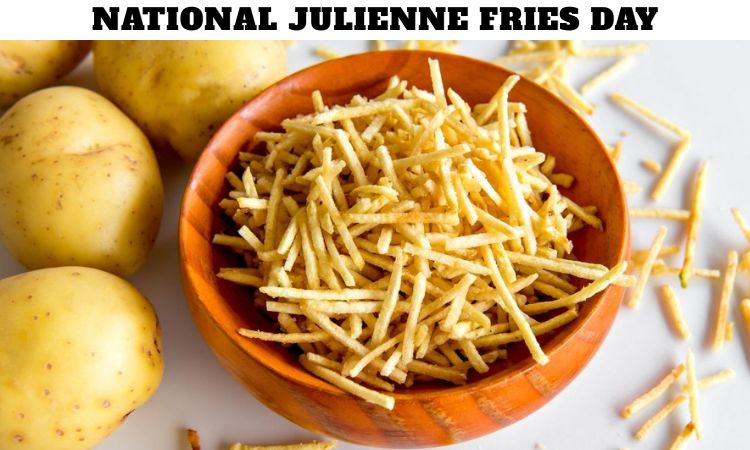
What Is National Julienne Fries Day and Why Does It Deserve a Spot on Your Calendar?
Every year on August 12, snack lovers and home cooks quietly celebrate one of the most underrated members of the potato family: the julienne fry. While National French Fry Day tends to steal the spotlight earlier in the summer, National Julienne Fries Day carves out its own moment to honor a specific style of fry — the thin, matchstick-cut potato that cooks faster, crisps up better, and delivers a satisfying crunch in every bite. If you’ve ever wondered why some fries snap cleanly while others go soft and limp, this day is your invitation to find out.
What Does “Julienne” Actually Mean?
The word “julienne” comes from French culinary tradition and refers to a specific knife cut — long, thin strips, typically about 1/8 inch (3mm) thick and a few inches long. It’s a technique chefs use not just for potatoes but for carrots, zucchini, bell peppers, and other vegetables that benefit from quick, even cooking. When applied to potatoes, the julienne cut produces what most people recognize as “shoestring fries” — thinner and more delicate than the thick-cut steak fries served at a pub, and typically thinner than standard fast-food fries as well.
Because julienne fries are cut so thin, they have a higher surface-area-to-volume ratio than thicker fries. That means more of the potato is exposed directly to hot oil, which translates into faster cooking times and a crispier finish. The trade-off is a softer, less substantial interior — julienne fries are almost all crunch, with just a whisper of fluffy potato in the center.
How Did Julienne Fries Get Their Own Holiday?
Like many food holidays, the exact origins of National Julienne Fries Day are murky. There’s no single founder credited with establishing it, and no government or culinary institution has an official record of how it came to be recognized. What is clear is that it fits into the broader trend of food-specific “national days” that have exploded in popularity over the past two decades, largely fueled by social media, restaurant marketing, and food blogs looking for a reason to post a mouthwatering photo.
What makes this particular day interesting is its specificity. Rather than celebrating “fries” broadly, it zeroes in on a single preparation style, which says something about how seriously fry enthusiasts take their craft. Ask any fry connoisseur, and they’ll tell you that cut thickness dramatically changes the eating experience — the crunch, the ratio of crispy exterior to soft interior, the way the fry holds up to dipping sauce, and even how quickly it cools down on the plate.
Why Are Julienne Fries Different From Other Fry Styles?
To understand why julienne fries earned their own day, it helps to compare them to their fry cousins:
- Julienne (shoestring) fries — thin matchstick cuts, roughly 1/8 inch thick, cook quickly and turn extremely crispy. Common at fast-food chains and diners.
- Standard-cut fries — about 1/4 to 3/8 inch thick, offering a balance between crispy exterior and fluffy interior. This is the most common fry style at casual restaurants.
- Steak fries — thick wedges, often 3/4 inch or more, with a soft, almost mashed-potato interior and minimal crunch.
- Crinkle-cut fries — wavy-edged fries cut with a special blade, designed to hold more surface area for seasoning and dipping sauce.
- Waffle fries — a lattice pattern created by rotating the potato between cuts, maximizing crispy edges.
Each style serves a different purpose. Steak fries are hearty and filling, waffle fries are built for dipping, and julienne fries are all about speed, crunch, and a lighter eating experience. If you love a fry that shatters slightly when you bite into it, julienne is likely your favorite style even if you didn’t know the name for it.
How Can You Celebrate National Julienne Fries Day?
Celebrating this holiday doesn’t require much beyond a love of potatoes and a willingness to get a little oil on your stovetop. Here are a few ways people mark the day.
Make a batch at home. Because julienne fries are thin, they’re one of the more forgiving fry styles to make in a home kitchen — no deep fryer required. A sharp knife, a mandoline, or a julienne peeler can all get the job done.
Visit a local diner or fast-food spot. Many fast-food chains serve fries that are julienne-cut by default, so this is an easy holiday to celebrate without any cooking at all. Pay attention to the cut next time you order and you may notice it’s thinner than you assumed.
Try a themed dipping sauce lineup. Because julienne fries are thin and crispy, they hold up well to being dunked repeatedly without going soggy immediately. Consider setting out three or four sauces — classic ketchup, garlic aioli, spicy mayo, and malt vinegar — for a mini fry-tasting event.
Experiment with seasoning. The large surface area of a julienne fry means seasoning clings to nearly every inch. This is a great day to try something beyond salt: smoked paprika, truffle salt, parmesan and herb, or a Cajun spice blend.
Share it on social media. Food holidays thrive online. A simple photo of a crispy batch of homemade fries with the hashtag #NationalJulienneFriesDay is enough to join in.
How Do You Make Crispy Julienne Fries at Home?
If you want to try your hand at making them, the process is simpler than it looks, though a few techniques make a real difference in crispiness.
Start with the right potato. Russet potatoes are the standard choice because of their high starch content and low moisture, both of which contribute to a crispier final product.
Cut evenly. Uniform thickness matters more with julienne fries than with thicker cuts, since even small variations cause some pieces to burn while others stay underdone. A mandoline with a julienne attachment makes this far easier than freehand knife work.
Soak before cooking. Soaking cut potatoes in cold water for at least 30 minutes — and ideally up to a few hours — draws out excess surface starch. This step is what separates limp fries from genuinely crispy ones, since excess starch on the surface can cause fries to stick together and steam rather than fry.
Dry thoroughly. After soaking, pat the potatoes completely dry. Any residual water will cause oil to spatter and will prevent proper browning.
Consider a double-fry method. Frying once at a lower temperature (around 325°F) cooks the interior, and a second fry at a higher temperature (around 375°F) crisps the exterior. This two-step method, borrowed from classic French technique, is often the secret behind restaurant-quality fries.
Season immediately after cooking. Salt and other seasonings adhere best to hot, freshly fried potatoes, while the surface is still slightly oily.
Don’t overcrowd the pan or fryer. Because julienne fries are thin, overcrowding causes the oil temperature to drop quickly, leading to soggy, oil-logged fries instead of crispy ones.
For those avoiding deep frying altogether, an air fryer or a hot oven with a light coating of oil can produce a reasonably crispy result, though the texture will differ slightly from traditionally fried potatoes.
Are Julienne Fries Healthier Than Other Fry Styles?
This is a common question, and the honest answer is: it depends on preparation more than cut. Because julienne fries are thin, they absorb proportionally more oil during frying compared to thicker-cut fries, simply due to their higher surface area. That means a deep-fried julienne fry may actually contain more oil per bite than a thick steak fry. However, when baked or air-fried with minimal oil, julienne-style potatoes can be a lighter option, since portions naturally feel larger due to the increased volume of thin strips compared to a few thick wedges.
Why Does a Day Like This Matter?
At first glance, a holiday dedicated to a specific potato cut might seem trivial. But food-specific days like this one serve a real purpose: they give people permission to slow down and appreciate small, often-overlooked details in everyday food. Julienne fries are something most people have eaten dozens of times without ever considering the technique behind them, the history of the cut, or why they taste different from other fry styles. National Julienne Fries Day offers a lighthearted excuse to notice those details, try a new recipe, or simply enjoy a familiar comfort food with a bit more intention.
Whether you spend August 12 slicing potatoes into perfect matchsticks at home or simply ordering your usual side of fries with a new appreciation for the cut, the day is really about celebrating a small culinary craft that quietly shows up on plates everywhere.
Frequently Asked Questions (FAQs)
1. When is National Julienne Fries Day?
National Julienne Fries Day is observed annually on August 12.
2. What does “julienne” mean in cooking?
Julienne is a French culinary knife cut that produces long, thin, matchstick-shaped strips, commonly used for potatoes and vegetables.
3. How thick are julienne fries compared to regular fries?
Julienne fries are typically about 1/8 inch thick, noticeably thinner than standard-cut fries, which usually range from 1/4 to 3/8 inch.
4. Are julienne fries the same as shoestring fries?
Yes, “julienne fries” and “shoestring fries” generally refer to the same thin, matchstick-style cut.
5. What potatoes work best for julienne fries?
Russet potatoes are the most popular choice due to their high starch and low moisture content, which helps produce a crispier fry.
6. Why do you soak potatoes before frying them?
Soaking removes excess surface starch, which helps prevent sogginess and improves overall crispiness during frying.
7. Can you make julienne fries without a deep fryer?
Yes, they can be baked in a hot oven or made in an air fryer with a light coating of oil, though the texture may differ slightly from deep-fried versions.
8. Are julienne fries healthier than thicker-cut fries?
Not necessarily; their higher surface area means they can absorb more oil when deep-fried, though baked or air-fried versions can be a lighter option.
9. What’s the best way to season julienne fries?
Because of their large surface area, julienne fries hold seasoning well — popular options include sea salt, smoked paprika, parmesan and herb blends, or Cajun spice.
10. How do restaurants get their fries so crispy?
Many use a double-fry method: a lower-temperature fry to cook the interior, followed by a higher-temperature fry to crisp the exterior.