

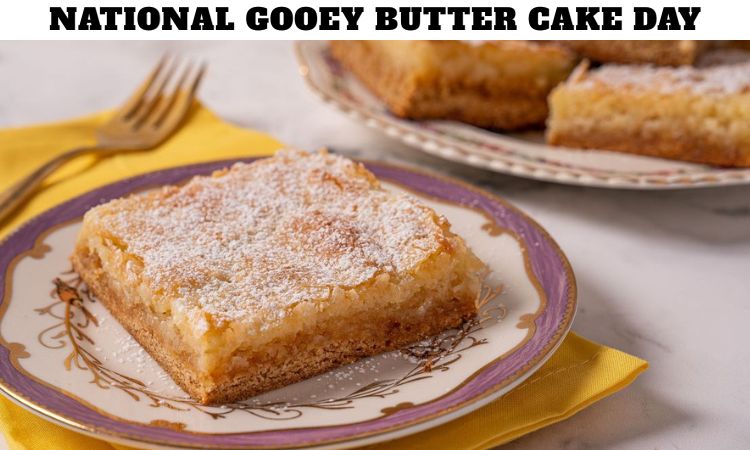
What Is National Gooey Butter Cake Day and Why Do We Celebrate It on August 12?
Every year on August 12, bakers, dessert lovers, and Midwesterners with a soft spot for nostalgia come together to celebrate National Gooey Butter Cake Day. It’s one of those wonderfully niche food holidays that doesn’t get the fanfare of National Pizza Day or National Chocolate Day, but for anyone who has ever sunk a fork into a slice of this dense, buttery, powdered-sugar-dusted dessert, it’s a day worth marking on the calendar. So what exactly is gooey butter cake, why does it have its own day, and how did a regional St. Louis specialty become a nationally recognized treat? Let’s dig in.
What Is Gooey Butter Cake, Exactly?
Gooey butter cake is not quite a cake and not quite a bar dessert — it lives somewhere in between. Traditionally, it consists of two layers: a thin, yeast-based or box-mix bottom crust and a rich, custard-like top layer made from butter, cream cheese, eggs, and powdered sugar. When baked, the top layer never fully sets, which is exactly the point. The result is a dessert with a slightly crisp edge, a soft cakey base, and a molten, sticky center that practically melts on the tongue.
There are two main styles you’ll encounter today. The “original” St. Louis version uses a yeasted dough bottom, closer to a coffee cake crust, topped with the buttery filling. The more common modern version — the one most home bakers make — uses a yellow cake mix for the base and a cream cheese filling on top. Both are finished with a generous dusting of powdered sugar, and both deliver that unmistakable gooey bite the dessert is named for.
Where Did Gooey Butter Cake Come From?
Like many beloved American desserts, gooey butter cake was born from a kitchen mistake. The most widely told story traces it back to St. Louis, Missouri, sometime in the 1930s. As the story goes, a baker — accounts differ on whether it was a bakery owner or an employee — was making a batch of coffee cake and accidentally reversed the usual ratio of butter to flour, using far more butter and far less flour than the recipe called for. Rather than toss the mistake, the baker baked it anyway. The result was a flat, dense, syrupy-sweet cake that customers unexpectedly loved.
Some versions of the legend place the mishap in a German-American bakery, which would explain the cake’s resemblance to German butter cakes (Butterkuchen), a streusel-topped yeast cake with roots in European baking traditions. Whether the St. Louis version was a genuine accident or an evolution of that older German recipe is debated among food historians, but what’s certain is that by the mid-20th century, gooey butter cake had become a beloved staple of St. Louis bakeries, diners, and home kitchens.
For decades, the cake remained a mostly regional phenomenon, closely associated with St. Louis in much the same way deep-dish pizza is tied to Chicago or beignets to New Orleans. St. Louis natives who moved away often brought the recipe with them, and local bakeries in the city still compete over whose version reigns supreme. Over time, thanks to food blogs, cooking shows, and cookbooks celebrating regional American desserts, gooey butter cake broke out of Missouri and found fans across the country — which set the stage for a national day dedicated to it.
Why Does Gooey Butter Cake Have Its Own Holiday?
National food holidays like this one typically emerge from a mix of grassroots enthusiasm and marketing efforts by bakeries, food brands, or hospitality organizations looking to give a beloved dish its own moment in the spotlight. Gooey Butter Cake Day fits that mold. August 12 has become the informally recognized date for celebrating the dessert, embraced by bakeries, food bloggers, and dessert-loving communities online, particularly in and around St. Louis, where local bakeries often run specials or host giveaways to mark the occasion.
Unlike a federally recognized holiday, National Gooey Butter Cake Day isn’t legislated or tied to a historical event with a documented founding date. Instead, it functions the way most modern food holidays do: as a shared cultural moment that spreads through social media, local news coverage, and word of mouth. Each year, the day gives St. Louis pride a boost and gives the rest of the country a reason to try (or rediscover) a dessert that might otherwise stay a regional secret.
How Do People Celebrate National Gooey Butter Cake Day?
Celebrating is refreshingly simple: bake one, buy one, or eat one. Here are some of the most popular ways people mark the day.
Bake it from scratch. Purists lean toward the traditional yeasted-dough version, which takes more time but rewards you with a chewier, more textured base reminiscent of the original 1930s recipe.
Use the classic box-mix shortcut. The cake-mix-and-cream-cheese version has become the default recipe for most American home bakers because it’s fast, foolproof, and nearly impossible to mess up. A yellow cake mix, a stick of butter, an egg, and a cream cheese layer with powdered sugar and vanilla is often all it takes.
Try a flavor twist. Bakers have taken the base recipe and run with it, creating pumpkin gooey butter cake in the fall, chocolate and peanut butter versions, lemon variations, and even pumpkin spice or red velvet takes for holidays throughout the year.
Support a local bakery. In St. Louis especially, bakeries such as those in the historic Central West End or South City neighborhoods often see a spike in gooey butter cake sales around August 12, and some run day-specific promotions.
Share it on social media. Home bakers and professional pastry accounts alike use the day to post photos and recipes, helping the dessert reach an even wider audience each year.
How Do You Make a Classic Gooey Butter Cake at Home?
If you want to celebrate by baking your own, the modern shortcut version is the easiest entry point. The base layer typically combines a boxed yellow cake mix with melted butter and an egg, pressed into a baking pan to form a soft, cookie-like crust. The topping layer blends softened cream cheese, eggs, vanilla extract, melted butter, and powdered sugar into a smooth batter that’s poured over the crust. The whole thing bakes until the edges turn golden and the center still jiggles slightly — that jiggle is the “gooey” part, and pulling it out too late is the most common mistake first-time bakers make. After cooling, a heavy dusting of powdered sugar finishes it off.
The traditional version swaps the cake-mix crust for a yeasted dough that needs to rise before baking, giving the finished product a slightly bready, coffee-cake-like base beneath the same rich, buttery topping.
Why Has Gooey Butter Cake Become So Popular Outside of St. Louis?
Part of the dessert’s spreading popularity comes down to how adaptable and forgiving the recipe is. Because the base can be made from a box mix, it’s accessible to bakers of any skill level, and because the filling recipe is so flexible, it lends itself easily to seasonal riffs like pumpkin or peppermint versions. Food media has also played a major role — cooking shows, regional food segments, and recipe blogs have introduced gooey butter cake to audiences who might never visit St. Louis but are eager to try a “hidden gem” of American regional baking. As with many once-regional foods, from key lime pie to New York cheesecake, the internet has helped gooey butter cake shed its local-only reputation.
A Sweet Day Worth Celebrating
National Gooey Butter Cake Day may not be a widely televised holiday, but it captures something genuinely charming about American food culture: a kitchen mistake from a St. Louis bakery nearly a century ago turned into a dessert cherished nationwide. Whether you bake the traditional yeasted version, whip up the quick cake-mix take, or simply pick up a slice from your local bakery, August 12 is as good an excuse as any to enjoy a rich, sticky, powdered-sugar-covered piece of Midwestern history.
Frequently Asked Questions (FAQs)
1. When is National Gooey Butter Cake Day?
National Gooey Butter Cake Day is celebrated every year on August 12.
2. What is gooey butter cake made of?
It’s typically made with two layers: a base of either yeasted dough or yellow cake mix, and a rich top layer of butter, cream cheese, eggs, and powdered sugar that stays soft and gooey after baking.
3. Where did gooey butter cake originate?
Gooey butter cake originated in St. Louis, Missouri, in the 1930s, reportedly after a baker accidentally reversed the ratio of butter to flour in a coffee cake recipe.
4. Is gooey butter cake supposed to be undercooked in the middle?
Yes. The center is meant to stay soft, dense, and slightly underset compared to a traditional cake, which is where the “gooey” texture and name come from.
5. What’s the difference between the original and modern versions of gooey butter cake?
The original St. Louis version uses a yeasted, coffee-cake-like dough for the base, while the modern, more common version uses a yellow cake mix for a quicker, no-rise crust.
6. Can you make gooey butter cake with flavors other than original?
Yes, popular variations include pumpkin, chocolate, peanut butter, lemon, and red velvet gooey butter cake, among many other seasonal twists.
7. How do you store gooey butter cake?
Because of its cream cheese filling, gooey butter cake should be stored covered in the refrigerator and is best eaten within about four to five days.
8. Is gooey butter cake the same as a Paula Deen “poke cake” or other butter cakes?
No, it’s a distinct dessert. Gooey butter cake has a two-layer structure with a set base and a soft, custard-like top, unlike poke cakes or other single-layer butter cakes.
9. Why is gooey butter cake associated with St. Louis specifically?
The dessert has deep roots in St. Louis’s German-American bakery tradition and has remained a point of local pride and identity in the city for nearly a century.
10. How can I celebrate National Gooey Butter Cake Day if I don’t bake?
You can celebrate by buying a slice or whole cake from a local bakery, ordering one online from a St. Louis-based bakery that ships nationally, or simply sharing your favorite gooey butter cake memory or photo on social media.