

What Is Ecuador Independence Day?
Ecuador Independence Day is celebrated every year on August 10 and commemorates the beginning of Ecuador’s independence movement from Spanish colonial rule. Known in Spanish as Día de la Independencia de Ecuador, the national holiday remembers the historic events of August 10, 1809, when Quito became the center of an important uprising against Spanish authority.
August 10 is particularly significant because it marks the establishment of the First Government Junta of Quito, an early attempt by local leaders to establish self-government. Although the movement did not immediately result in complete independence, it became an important milestone in Ecuador’s long struggle for freedom.
Today, Ecuador Independence Day is a major national occasion. Government institutions, schools, communities, families, and businesses participate in celebrations that honor the country’s history, culture, national identity, and independence heroes.
Why Is Ecuador Independence Day Celebrated on August 10?
Ecuador Independence Day is celebrated on August 10 because of the events that took place in Quito on August 10, 1809. On that day, a group of local leaders challenged Spanish colonial authority and formed a governing body that sought greater political autonomy.
The movement emerged during a period of significant political uncertainty in Spain. Napoleon Bonaparte’s invasion of Spain and the removal of Spanish King Ferdinand VII created a crisis throughout the Spanish Empire. In Quito, local political leaders saw an opportunity to establish their own government.
The uprising in Quito became one of the earliest major independence movements in Spanish America. Although Spanish forces eventually suppressed the movement, August 10 remained an important symbol of Ecuadorian resistance.
The date therefore represents more than a single political event. It symbolizes the beginning of a broader process that eventually led Ecuador toward complete independence.
What Happened in Quito on August 10, 1809?
On August 10, 1809, revolutionary leaders in Quito organized a movement against Spanish colonial rule. They removed representatives of the existing colonial administration and established a governing council commonly known as the First Government Junta of Quito.
The movement was supported by prominent figures who wanted greater political control for local authorities. The leaders argued that government should represent the interests of the people of Quito rather than remain entirely controlled by Spanish officials.
The uprising was significant because it demonstrated that colonial authority could be challenged. Quito subsequently became associated with the early independence movements that were spreading across Latin America.
However, the revolutionary government faced serious challenges. Spanish authorities eventually regained control, and many participants were arrested. The struggle for independence continued for several more years.
The events of August 10 nevertheless became deeply embedded in Ecuador’s national history and are remembered as the beginning of the country’s independence process.
Who Were the Important Leaders of Ecuador’s Independence Movement?
Several political, intellectual, and military figures played important roles in Ecuador’s journey toward independence. Among the figures associated with the early movement was Juan Pío Montúfar, the Marquis of Selva Alegre, who became president of the First Government Junta of Quito.
Other important figures included Eugenio Espejo, whose ideas about education, political awareness, and social reform influenced the intellectual environment in Quito, and Manuela Cañizares, who is remembered for her support of the revolutionary movement.
The later struggle for independence also involved military leaders and revolutionaries who helped bring about the final liberation of Ecuadorian territory.
One of the most important figures in the broader independence campaign was Antonio José de Sucre, a Venezuelan military leader and close associate of Simón Bolívar. Sucre led the patriot forces to victory at the Battle of Pichincha on May 24, 1822.
The victory at Pichincha was decisive because it resulted in the liberation of Quito and effectively ended Spanish colonial control over the region.
How Did Ecuador Eventually Gain Independence?
Ecuador’s independence was not achieved through the events of a single day. Instead, it developed through years of political movements, military campaigns, conflicts, and revolutionary efforts.
The uprising of August 10, 1809, was an early step. After the movement was defeated, resistance continued. Political and military campaigns gained strength as independence movements spread throughout South America.
A decisive moment came on May 24, 1822, when patriot forces under Antonio José de Sucre defeated Spanish forces at the Battle of Pichincha near Quito.
The victory allowed Quito to become independent from Spanish colonial rule. Ecuadorian territory subsequently became part of Gran Colombia, a larger republic established under the leadership of Simón Bolívar.
Ecuador later separated from Gran Colombia in 1830 and became an independent republic.
For this reason, Ecuador has several important historical dates connected with independence. August 10 commemorates the beginning of the independence movement in Quito, while May 24 commemorates the decisive military victory that secured independence for Quito.
What Is the Historical Significance of Ecuador Independence Day?
Ecuador Independence Day has enormous historical and cultural significance because it represents the country’s struggle for political freedom and self-determination.
The events of August 10 demonstrated the growing desire among local populations to have greater control over their government. At a time when Spain controlled large parts of South America, challenging colonial authority was a significant political act.
The uprising also became part of the wider independence movement that transformed Latin America during the early nineteenth century.
For Ecuadorians, the day represents courage, national identity, political change, and the sacrifices made by people who challenged colonial rule.
The holiday also provides an opportunity for younger generations to learn about the country’s history and understand how Ecuador developed into a sovereign nation.
How Do People Celebrate Ecuador Independence Day?
Ecuador Independence Day is celebrated with a combination of official ceremonies, cultural events, public gatherings, music, performances, and patriotic activities.
In cities across Ecuador, streets and public spaces may be decorated with the colors of the national flag: yellow, blue, and red. Public ceremonies often focus on Ecuador’s history and the importance of national unity.
Schools and educational institutions may organize special programs featuring historical presentations, cultural performances, songs, and activities related to Ecuadorian independence.
Communities also organize events that showcase traditional music, dance, food, crafts, and local customs. These celebrations allow people to connect the historical meaning of the holiday with Ecuador’s diverse cultural heritage.
Families may spend the holiday together, attend public events, visit historical locations, or simply enjoy traditional Ecuadorian food and entertainment.
What Role Does Quito Play in Ecuador Independence Day?
Quito holds a particularly important place in Ecuador Independence Day celebrations because the independence movement commemorated on August 10 began there.
The historic center of Quito provides an important setting for remembering the country’s colonial and independence history. Many buildings, churches, plazas, and streets are connected with Ecuador’s historical development.
During the national holiday period, Quito often becomes a focal point for official events and cultural activities.
The city’s historic architecture also provides a powerful reminder of the period in which Ecuador’s independence movement developed. Visitors can explore historic locations while learning about the political and social changes that transformed the region.
Quito’s connection to August 10 makes it one of the most important places for understanding Ecuadorian independence.
What Are the National Symbols Associated With Ecuador Independence Day?
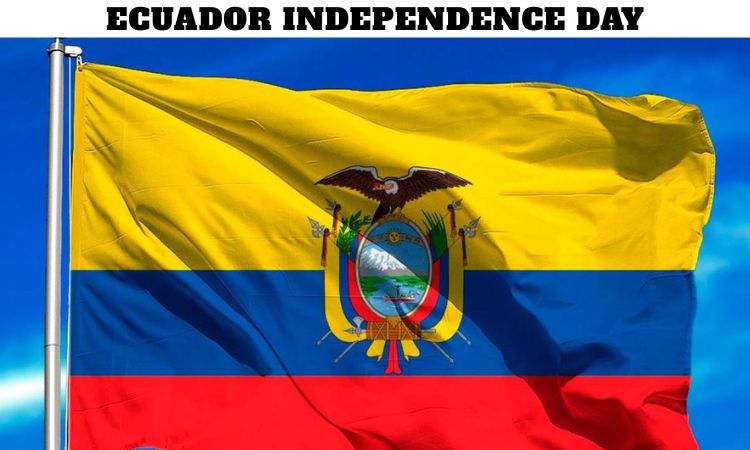
The Ecuadorian flag is one of the most visible symbols associated with the national holiday. It consists of three horizontal colors: yellow, blue, and red. Yellow represents the country’s resources and richness, blue is associated with the sky and sea, and red represents the blood shed by those who fought for independence.
The national coat of arms is another important national symbol. It appears at the center of the official version of the flag and contains imagery representing Ecuador’s geography, history, and national identity.
The national anthem is also an important part of official patriotic ceremonies. During Independence Day events, national symbols help create a sense of unity and remind citizens of the country’s historical journey.
What Traditional Foods Are Enjoyed During Ecuador Independence Day?
Ecuadorian cuisine is an important part of national celebrations. Independence Day provides an opportunity for families and communities to enjoy traditional dishes that reflect the country’s diverse regions and cultural influences.
Popular Ecuadorian foods include encebollado, a flavorful fish and yuca soup often associated with the country’s coastal cuisine. Fanesca, although traditionally connected with Easter, is another well-known Ecuadorian dish that demonstrates the country’s rich culinary heritage.
Other foods commonly enjoyed in Ecuador include llapingachos, potato patties often served with cheese and other accompaniments, as well as hornado, a traditional roasted pork dish.
Food traditions can vary considerably between the coastal, Andean, Amazonian, and Galápagos regions. This diversity is one of the defining characteristics of Ecuadorian culture.
Why Is Ecuador Independence Day Important to Ecuadorians?
Ecuador Independence Day is important because it connects modern Ecuador with the generations that fought for political freedom.
The holiday encourages people to remember the sacrifices associated with the independence movement while celebrating Ecuador’s cultural diversity and national identity.
It is also an opportunity to reflect on the values associated with independence, including freedom, self-government, unity, and civic responsibility.
For younger generations, August 10 provides a chance to learn about the country’s history and understand that independence developed through a long and complicated process rather than through one isolated event.
The holiday therefore serves both a historical and cultural purpose. It remembers the past while encouraging national pride in the present.
How Can People Learn More About Ecuador’s Independence History?
People can learn about Ecuador’s independence by studying historical accounts, visiting museums, exploring Quito’s historic center, and learning about the individuals who participated in the independence movement.
Historical sites in Quito provide opportunities to understand the political environment of the colonial period. Museums and cultural institutions also preserve documents, artwork, artifacts, and information related to Ecuador’s history.
Students can explore the timeline from the August 10, 1809 uprising through the Battle of Pichincha in 1822 and the eventual establishment of Ecuador as an independent republic.
Understanding this history also places Ecuador’s independence within the wider context of Latin America’s struggle against Spanish colonial rule.
How Is Ecuador Independence Day Observed Today?
Today, Ecuador Independence Day combines historical remembrance with modern expressions of national pride. Official ceremonies, educational programs, cultural events, music, traditional foods, and public gatherings help communities commemorate the occasion.
The holiday also reminds Ecuadorians of the importance of preserving their cultural heritage. Ecuador is home to diverse Indigenous, Afro-Ecuadorian, Mestizo, and other cultural communities, each contributing to the country’s national identity.
August 10 therefore represents both a historical milestone and an opportunity to celebrate the cultural richness of modern Ecuador.
As Ecuadorians gather with families and communities, the day serves as a reminder of the country’s long journey from colonial rule to national sovereignty.
What Is the Difference Between Ecuador Independence Day and the Battle of Pichincha?
Ecuador Independence Day on August 10 and the Battle of Pichincha on May 24 commemorate different stages of Ecuador’s independence struggle.
August 10, 1809, marks the beginning of the Quito independence movement and the formation of the First Government Junta of Quito.
The Battle of Pichincha took place on May 24, 1822, when patriot forces led by Antonio José de Sucre defeated Spanish forces near Quito. This victory effectively secured the independence of Quito from Spanish colonial rule.
Both dates are therefore important, but they represent different moments in the country’s journey toward independence.
What Does Ecuador Independence Day Mean for the Future?
Ecuador Independence Day is not only about remembering historical events. It also provides an opportunity to think about the country’s future.
National holidays can encourage citizens to consider the meaning of independence in contemporary society. Freedom, democracy, cultural identity, education, equality, and civic participation remain important elements of a nation’s development.
For Ecuador, August 10 represents a connection between the struggles of the past and the responsibilities of the present.
As Ecuador continues to develop, the historical significance of Independence Day remains relevant because it reminds citizens of the importance of unity, self-determination, and commitment to the country’s future.
Frequently Asked Questions (FAQs)
1. When is Ecuador Independence Day celebrated?
Ecuador Independence Day is celebrated every year on August 10. The date commemorates the beginning of the independence movement in Quito in 1809.
2. What happened on August 10, 1809?
On August 10, 1809, revolutionary leaders in Quito established the First Government Junta of Quito and challenged Spanish colonial authority.
3. Is August 10 a national holiday in Ecuador?
Yes. August 10 is an important national holiday in Ecuador and is officially recognized as Independence Day.
4. Who led Ecuador to independence?
Ecuador’s independence was the result of efforts by many political and military leaders. Antonio José de Sucre played a decisive military role in the liberation of Quito.
5. When was the Battle of Pichincha?
The Battle of Pichincha took place on May 24, 1822, near Quito. The patriot victory effectively ended Spanish control over Quito.
6. Why is Quito important to Ecuador’s independence?
Quito was the location of the August 10, 1809 uprising and the formation of the First Government Junta of Quito, making it central to Ecuador’s independence history.
7. What colors are on the Ecuadorian flag?
The Ecuadorian flag features three main colors: yellow, blue, and red.
8. How do Ecuadorians celebrate Independence Day?
Celebrations can include official ceremonies, cultural programs, music, traditional dances, public events, patriotic activities, and family gatherings.
9. Did Ecuador become independent immediately in 1809?
No. The 1809 uprising was an early step in the independence process. Complete liberation came later, particularly after the Battle of Pichincha in 1822.
10. What does Ecuador Independence Day represent?
Ecuador Independence Day represents the country’s struggle for self-government, freedom, sovereignty, national identity, and independence from Spanish colonial rule.