

What Is Tunisia Republic Day?
Tunisia Republic Day is celebrated every year on July 25 to commemorate the abolition of the monarchy and the establishment of the Republic of Tunisia in 1957. It is one of the country’s most significant national holidays because it marks the beginning of a new political era built on republican principles, national sovereignty, and modernization. The day represents the aspirations of the Tunisian people to shape their own future after gaining independence from French colonial rule.
The celebration of Republic Day is more than just a remembrance of a constitutional change. It reflects Tunisia’s long journey toward self-governance, democratic development, national identity, and social progress. Every year, Tunisians observe this important occasion with official ceremonies, patriotic events, cultural activities, and educational programs that highlight the country’s achievements and historical milestones.
Republic Day is an opportunity for citizens to appreciate the sacrifices made by earlier generations who worked tirelessly for independence and nation-building. Schools, government institutions, and communities often organize programs that encourage younger generations to learn about Tunisia’s history and understand the importance of preserving national unity and democratic values.
Why Is Tunisia Republic Day Celebrated on July 25?
Tunisia Republic Day is celebrated on July 25 because on this day in 1957, the Constituent Assembly officially abolished the monarchy and declared Tunisia a republic. This historic decision came just over a year after Tunisia gained independence from France on March 20, 1956.
Following independence, the country was initially ruled as a constitutional monarchy under Muhammad VIII al-Amin, commonly known as Lamine Bey. However, political leaders believed that establishing a republic would better represent the aspirations of the Tunisian people and provide a stronger foundation for modernization and democratic governance.
On July 25, 1957, the National Constituent Assembly voted unanimously to end the monarchy. Habib Bourguiba, one of the leading figures of Tunisia’s independence movement, became the country’s first President. This marked the beginning of a new political system focused on republican governance, national development, and institutional reforms.
The date has remained one of Tunisia’s most respected national holidays because it symbolizes political transformation, independence, and the country’s commitment to self-rule.
How Did Tunisia Become a Republic?
The path toward becoming a republic began with Tunisia’s struggle against colonial rule. France established a protectorate over Tunisia in 1881, limiting the country’s political independence while maintaining the monarchy under French supervision. For decades, Tunisian nationalists sought greater autonomy and eventually complete independence.
Habib Bourguiba emerged as one of the most influential leaders of the independence movement through the Neo Destour Party. His political leadership helped mobilize widespread public support for ending colonial control.
After negotiations with France, Tunisia officially gained independence on March 20, 1956. Although the monarchy initially remained in place, political reforms continued rapidly. The Constituent Assembly examined the country’s future political structure and concluded that a republican system would better serve national interests.
The declaration of the republic on July 25, 1957, formally abolished the monarchy. Habib Bourguiba assumed the presidency and introduced numerous reforms aimed at modernizing Tunisia. These reforms included improvements in education, women’s rights, healthcare, economic development, and government administration. The establishment of the republic laid the foundation for Tunisia’s modern political identity.
Why Is Tunisia Republic Day Important?
Tunisia Republic Day holds deep historical and political significance because it represents the country’s transition from monarchy to republican governance. It symbolizes the determination of Tunisians to build an independent nation guided by constitutional institutions rather than hereditary rule.
The holiday also celebrates national unity. It reminds citizens that independence alone was not the final goal; building effective democratic institutions, promoting economic development, and improving social welfare were equally important objectives. Republic Day encourages reflection on these national aspirations and the progress made over the decades.
For many Tunisians, the holiday serves as an occasion to honor leaders, activists, educators, workers, and ordinary citizens who contributed to the country’s development. It is also a reminder that responsible citizenship, public participation, and national solidarity remain essential for the future of Tunisia.
How Is Tunisia Republic Day Celebrated?
Tunisia Republic Day is observed across the country with numerous patriotic and cultural activities. Government officials participate in official ceremonies that include speeches, flag-raising events, military honors, and tributes to national leaders who played important roles in Tunisia’s independence and republican transformation.
Public buildings, government offices, schools, and streets are decorated with the Tunisian national flag. Educational institutions organize lectures, historical exhibitions, essay competitions, and performances that teach students about the country’s history.
Many communities host cultural festivals featuring traditional Tunisian music, dance, folklore, and local cuisine. Museums and historical sites may organize special exhibitions that showcase important events from Tunisia’s independence movement and republican history.
Families often spend the holiday together by attending local events or watching televised ceremonies that commemorate the nation’s achievements. Media organizations publish documentaries, interviews, and historical programs that educate the public about the importance of Republic Day.
Who Was Habib Bourguiba and Why Is He Connected to Republic Day?
Habib Bourguiba occupies a central place in Tunisia’s modern history. Often referred to as the “Father of Modern Tunisia,” he led the country’s struggle for independence and became the first President of the Republic following the abolition of the monarchy.
Bourguiba believed that national development required significant reforms in education, healthcare, women’s rights, and public administration. During his presidency, Tunisia introduced progressive policies that expanded educational opportunities, promoted gender equality, strengthened public health services, and modernized state institutions.
Although historians continue to debate various aspects of his political legacy, there is broad recognition of his role in shaping Tunisia’s early republican institutions. Republic Day often includes tributes to his contributions and the broader independence movement that transformed Tunisia into a sovereign republic.
What Makes Tunisia Republic Day Relevant Today?
Even decades after the establishment of the republic, Tunisia Republic Day continues to hold contemporary significance. The holiday provides an opportunity for citizens to reflect on the country’s democratic aspirations, constitutional development, and ongoing efforts to strengthen governance and national unity.
Modern Tunisia has experienced periods of political change, particularly following the 2011 Tunisian Revolution, which drew global attention as the beginning of the Arab Spring. Republic Day now carries additional meaning as Tunisians continue discussing constitutional reforms, democratic participation, economic development, and the future direction of the nation.
The annual celebration reminds citizens that democracy and national progress require continuous civic engagement, respect for institutions, and commitment to the rule of law. Republic Day therefore remains both a historical commemoration and an occasion for looking toward the future.
What Are Some Interesting Facts About Tunisia Republic Day?
- One interesting fact is that Tunisia became independent from France in 1956 but officially became a republic one year later on July 25, 1957. These are two separate but closely connected milestones in the country’s modern history.
- Another notable fact is that Tunisia was among the first countries in North Africa to introduce significant legal reforms promoting women’s rights after becoming a republic. These reforms became an important part of the country’s modernization efforts.
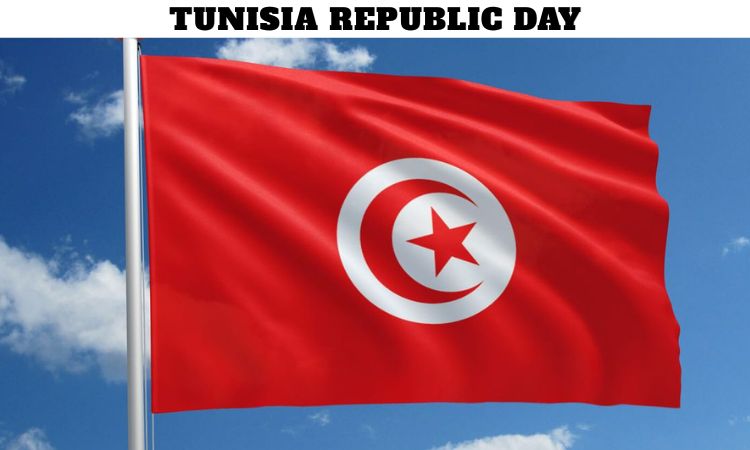
- The Tunisian national flag, featuring a white circle with a red crescent and star on a red background, is prominently displayed throughout Republic Day celebrations as a symbol of national pride and sovereignty.
- Republic Day also highlights Tunisia’s rich cultural heritage, blending Arab, Berber, Mediterranean, African, and Islamic influences. Cultural performances during the holiday often showcase this diverse heritage through traditional music, crafts, and cuisine.
- The holiday serves both as a celebration of historical achievements and as an opportunity to encourage civic responsibility among younger generations who will shape Tunisia’s future.
How Can People Observe Tunisia Republic Day Respectfully?
People can observe Tunisia Republic Day by learning about the country’s history, independence movement, and republican transformation. Reading historical accounts, watching documentaries, or visiting museums helps deepen understanding of the significance of July 25.
Educational institutions can organize discussions about Tunisia’s political development, constitutional history, and national identity. Cultural organizations may host exhibitions featuring traditional Tunisian art, music, literature, and historical artifacts.
Individuals can also honor the occasion by reflecting on the values of freedom, responsible citizenship, national unity, and democratic participation. These principles remain relevant not only in Tunisia but also for societies around the world that value peaceful governance and civic engagement.
Tunisia Republic Day ultimately celebrates a defining chapter in the nation’s history while inspiring future generations to continue building a stable, prosperous, and united country.
Tunisia Republic Day, celebrated annually on July 25, marks one of the most important milestones in the nation’s modern history. The abolition of the monarchy in 1957 and the establishment of the Republic transformed Tunisia’s political landscape and opened a new chapter focused on independence, modernization, and national development. The holiday honors the vision and determination of leaders and citizens who worked to build a sovereign republic after decades of colonial rule. Through official ceremonies, educational activities, cultural celebrations, and patriotic events, Tunisians remember their past while looking toward a future built on unity, civic responsibility, and democratic values. Republic Day continues to stand as a proud symbol of Tunisia’s identity, resilience, and enduring commitment to national progress.
Frequently Asked Questions (FAQs)
1. When is Tunisia Republic Day celebrated?
Tunisia Republic Day is celebrated every year on July 25.
2. Why is Tunisia Republic Day important?
It commemorates the abolition of the monarchy and the establishment of the Republic of Tunisia in 1957.
3. Who became Tunisia’s first President?
Habib Bourguiba became the first President of the Republic of Tunisia.
4. When did Tunisia gain independence from France?
Tunisia gained independence on March 20, 1956.
5. Is Tunisia Republic Day a public holiday?
Yes, it is one of Tunisia’s official national public holidays.
6. How do Tunisians celebrate Republic Day?
They celebrate with official ceremonies, cultural events, flag displays, educational programs, and patriotic activities.
7. What happened on July 25, 1957?
The Constituent Assembly abolished the monarchy and officially declared Tunisia a republic.
8. What does Republic Day symbolize?
It symbolizes national sovereignty, republican governance, modernization, and unity.
9. Why is Habib Bourguiba associated with Republic Day?
He led Tunisia’s independence movement and became the country’s first President after the republic was established.
10. Can tourists participate in Republic Day celebrations?
Yes, visitors can enjoy public ceremonies, cultural festivals, historical exhibitions, and local celebrations while respecting local customs.