

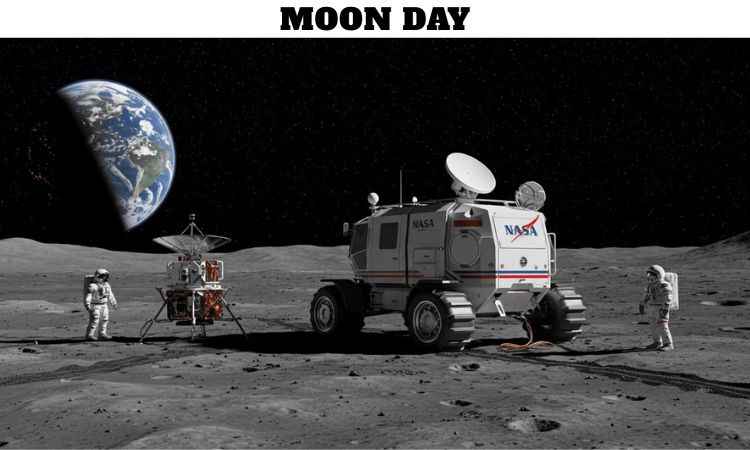
What is Moon Day and why is it celebrated on July 20?
Moon Day is observed every year on July 20 to commemorate one of humanity’s greatest achievements: the first successful crewed landing on the Moon. On July 20, 1969, NASA astronauts Neil Armstrong and Buzz Aldrin became the first humans to walk on the lunar surface during the historic Apollo 11 mission. Their achievement represented a giant leap for science, technology, engineering, and international human ambition. Moon Day serves as a reminder of the power of exploration and the extraordinary progress that can be made when people work together toward a common goal.
The observance is especially popular among educators, astronomy enthusiasts, museums, science centers, and space agencies. Many organizations use the day to inspire interest in space science, encourage students to pursue careers in STEM fields, and reflect on the ongoing human quest to explore beyond Earth. Moon Day is not only about looking back at history; it is also about imagining the future of lunar exploration and deep-space missions.
How did the Apollo 11 mission change history?
The Apollo 11 mission was launched on July 16, 1969, from the Kennedy Space Center in Florida. The spacecraft carried astronauts Neil Armstrong, Buzz Aldrin, and Michael Collins. After traveling approximately 384,400 kilometers from Earth, the lunar module Eagle landed on the Moon on July 20, 1969. Armstrong’s famous words, “That’s one small step for man, one giant leap for mankind,” became one of the most memorable statements in modern history.
The mission demonstrated that humans could travel to another celestial body, land safely, conduct scientific experiments, and return to Earth. It also accelerated advancements in computing, telecommunications, materials science, and aerospace engineering. Technologies developed during the space race eventually found applications in everyday life, influencing medical devices, weather forecasting, satellite communications, and navigation systems.
Beyond technology, Apollo 11 had a profound cultural impact. Millions of people around the world watched the landing on television, sharing a moment of collective wonder. The Moon landing symbolized human ingenuity and the possibility of achieving goals that once seemed impossible.
What happened on July 20, 1969?
On July 20, 1969, the lunar module Eagle separated from the command module and began its descent to the Moon’s surface. Armstrong and Aldrin navigated the module while Collins remained in lunar orbit aboard the command module Columbia. After a tense descent that required manual adjustments to avoid hazardous terrain, Eagle landed in the Sea of Tranquility.
Several hours later, Armstrong descended the ladder and became the first human to set foot on the Moon. Aldrin joined him shortly afterward. During their time on the surface, the astronauts collected lunar samples, deployed scientific instruments, took photographs, and planted the American flag. They spent about two and a half hours outside the lunar module before returning inside and eventually beginning the journey back to Earth.
The success of the mission fulfilled President John F. Kennedy‘s goal of landing a man on the Moon and returning him safely to Earth before the end of the 1960s.
Why does the Moon continue to fascinate people?
The Moon has captivated humanity for thousands of years. Ancient civilizations created myths, legends, calendars, and religious traditions based on its phases. The Moon influences tides, affects Earth’s natural cycles, and provides a bright presence in the night sky. Its changing appearance has inspired poets, artists, scientists, and dreamers across cultures.
Scientifically, the Moon offers valuable clues about the formation of the Earth and the early history of the solar system. Because it has no atmosphere and experiences little geological activity compared to Earth, much of its ancient surface remains preserved. Studying lunar rocks helps researchers understand events that occurred billions of years ago.
In recent years, interest in the Moon has increased again as space agencies and private companies plan new lunar missions. Future projects aim to establish long-term human presence on the Moon, test technologies for missions to Mars, and explore the possibility of using lunar resources to support deeper space exploration.
How is Moon Day celebrated around the world?
Moon Day is celebrated in many different ways depending on local traditions and educational opportunities. Planetariums often host special shows about the Moon and the Apollo program. Museums organize exhibitions featuring lunar rocks, spacecraft models, and historical photographs. Schools may conduct science projects, build model rockets, or hold astronomy workshops.
Astronomy clubs frequently arrange nighttime observing sessions where participants use telescopes to view craters, mountains, and other lunar features. Some communities host lectures by scientists and space historians, while libraries create displays about space exploration. Families may celebrate by watching documentaries about the Moon landing or by observing the Moon together.
Online events have also become increasingly popular. Space agencies, universities, and science organizations often share educational videos, virtual tours, and interactive activities that allow people from around the world to participate in Moon Day celebrations.
What can students learn from Moon Day?
Moon Day provides an excellent opportunity for students to learn about science, mathematics, engineering, history, and teamwork. The Apollo program involved thousands of scientists, engineers, technicians, and support personnel working together to solve complex problems. Students can explore topics such as rocket propulsion, orbital mechanics, computer systems, and lunar geology.
The day also teaches important lessons about perseverance and innovation. The challenges faced during the Apollo missions required creative thinking and careful planning. By studying how these challenges were overcome, students can develop problem-solving skills and gain appreciation for the collaborative nature of scientific achievement.
Many educators use Moon Day to encourage curiosity about space and to demonstrate how scientific discoveries can lead to technological advancements that benefit society.
What is the future of lunar exploration?
The Moon is once again becoming a major destination for space exploration. NASA’s Artemis program aims to return astronauts to the lunar surface and establish a sustainable presence there. Other countries, including China, India, Japan, and members of the European Space Agency, are also developing lunar exploration initiatives.
Future missions may build research stations near the lunar south pole, where water ice is believed to exist in permanently shadowed craters. This ice could potentially be used for drinking water, oxygen production, and rocket fuel. The Moon may also serve as a testing ground for technologies needed for future human missions to Mars.
Private companies are increasingly involved in lunar transportation, landers, and infrastructure development. As a result, the coming decades could see a new era of international cooperation and commercial activity focused on the Moon.
Why is Moon Day important today?
More than five decades after the Apollo 11 landing, Moon Day remains relevant because it celebrates human curiosity and the pursuit of knowledge. The challenges facing modern society, from climate monitoring to space exploration, require scientific research and global collaboration. The Moon landing demonstrated what can be accomplished when nations invest in education, innovation, and ambitious goals.
Moon Day also encourages people to look beyond immediate concerns and consider humanity’s long-term future. The exploration of space expands our understanding of the universe and may eventually help ensure the survival and progress of our species.
For many people, the observance is a moment to step outside, look up at the Moon, and remember that human beings once traveled there. It is a reminder that extraordinary achievements begin with imagination, determination, and a willingness to explore the unknown.
Moon Day on July 20 honors the historic moment when humans first walked on the Moon and opened a new chapter in exploration. The legacy of Apollo 11 continues to influence science, technology, education, and international cooperation. Whether celebrated through telescope observations, classroom activities, museum exhibits, or simply by gazing at the night sky, Moon Day invites people of all ages to appreciate the achievements of the past and the possibilities of the future. As humanity prepares for a new generation of lunar missions, the spirit of Moon Day remains a powerful symbol of discovery, innovation, and the enduring desire to reach beyond our world.
Frequently Asked Questions (FAQs)
1. What is Moon Day?
Moon Day is an annual observance on July 20 that commemorates the first human landing on the Moon during the Apollo 11 mission in 1969.
2. Why is Moon Day celebrated on July 20?
It is celebrated on July 20 because that was the date when Neil Armstrong and Buzz Aldrin landed on the Moon.
3. Who were the astronauts on Apollo 11?
The Apollo 11 crew consisted of Neil Armstrong, Buzz Aldrin, and Michael Collins.
4. What did Neil Armstrong say when he stepped onto the Moon?
He famously said, “That’s one small step for man, one giant leap for mankind.”
5. Where did Apollo 11 land on the Moon?
The lunar module landed in the Sea of Tranquility on the Moon.
6. How do people celebrate Moon Day?
People celebrate through astronomy events, museum exhibits, educational programs, telescope observations, documentaries, and science activities.
7. Why is the Moon important for science?
The Moon provides valuable information about the formation of Earth and the early history of the solar system.
8. What is NASA’s Artemis program?
The Artemis program is NASA’s initiative to return astronauts to the Moon and establish a sustainable human presence there.
9. Can the Moon help future missions to Mars?
Yes, the Moon can serve as a testing ground for technologies and systems needed for future human missions to Mars.
10. Is Moon Day an official holiday?
Moon Day is generally observed as a commemorative and educational day rather than a widely recognized public holiday.