
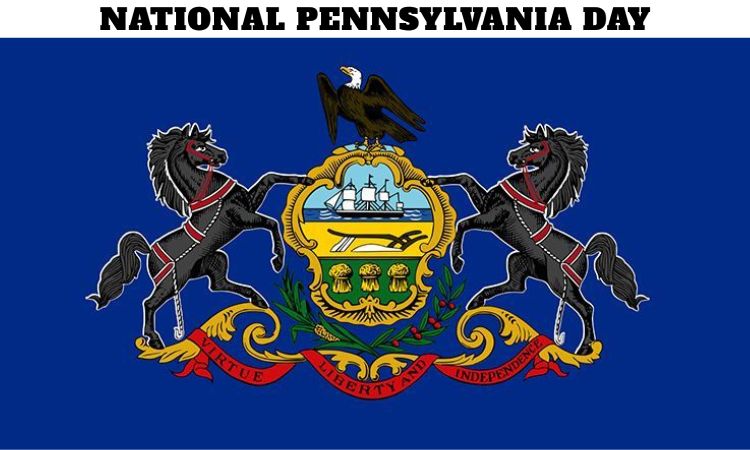
National Pennsylvania Day is celebrated every year on July 20 to honor the rich history, cultural heritage, and lasting contributions of the Commonwealth of Pennsylvania. As one of the original thirteen colonies, Pennsylvania has played a central role in the development of the United States. From the signing of the Declaration of Independence in Philadelphia to its influence on industry, education, transportation, and agriculture, Pennsylvania has shaped the nation in countless ways. This observance provides an opportunity for residents and visitors alike to appreciate the state’s achievements, traditions, landmarks, and diverse communities.
Pennsylvania is often referred to as the “Keystone State,” a nickname that reflects its crucial role in holding together the original colonies and supporting the formation of the United States. The state is known for its vibrant cities, scenic countryside, historical sites, and cultural diversity. National Pennsylvania Day encourages people to explore what makes the state unique, whether through its famous foods, historical attractions, natural beauty, or local traditions.
The celebration of National Pennsylvania Day is part of a broader effort to recognize each U.S. state and its contributions to the country. July 20 serves as a day to learn more about Pennsylvania’s past while also appreciating its present-day influence on American life.
What is National Pennsylvania Day?
National Pennsylvania Day is a commemorative observance dedicated to celebrating the state of Pennsylvania. The day highlights the state’s historical importance, cultural identity, economic achievements, and natural attractions. While it is not a federal holiday, it is recognized by many organizations, educational institutions, and communities that wish to honor Pennsylvania’s legacy.
The observance encourages people to engage with the state’s history and culture through activities such as visiting museums, exploring historical landmarks, attending local events, enjoying traditional Pennsylvania foods, and learning about notable Pennsylvanians. For residents, it is a chance to celebrate state pride, while for others, it offers an opportunity to discover why Pennsylvania holds such a significant place in American history.
Why is Pennsylvania called the Keystone State?
The nickname “Keystone State” has deep historical roots. A keystone is the central stone in an arch that holds all the other stones in place. During the colonial period and the early years of the United States, Pennsylvania was considered geographically, economically, and politically central to the nation. Its location between the northern and southern colonies made it an important bridge for trade, communication, and cooperation.
Pennsylvania also played a vital role in the Revolutionary War and the formation of the U.S. government. The Continental Congress met in Philadelphia, and both the Declaration of Independence and the U.S. Constitution were signed there. Because of these contributions, Pennsylvania earned a reputation as the state that helped hold the young nation together, much like a keystone supports an arch.
What is the history of Pennsylvania?
Pennsylvania was founded in 1681 when King Charles II granted land to William Penn, a Quaker leader seeking religious freedom. Penn established the colony as a place where people of different faiths could live peacefully. This commitment to tolerance attracted settlers from various backgrounds, including English, German, Dutch, and Swedish immigrants.
Philadelphia quickly became one of the most important cities in colonial America. During the American Revolution, it served as the meeting place for the Continental Congress. In 1776, delegates gathered in Independence Hall to adopt the Declaration of Independence. Later, in 1787, the Constitutional Convention met in the same building to draft the U.S. Constitution.
Pennsylvania was also a major center of industry during the 19th and 20th centuries. The state became known for steel production, coal mining, railroads, and manufacturing. Cities such as Pittsburgh emerged as industrial powerhouses that helped fuel America’s economic growth.
What are some famous landmarks in Pennsylvania?
Pennsylvania is home to numerous landmarks that attract visitors from around the world. Independence Hall is perhaps the most famous, as it was the site of both the Declaration of Independence and the Constitution. Nearby, the Liberty Bell stands as a symbol of freedom and independence.
In Philadelphia, visitors can also explore Reading Terminal Market, Philadelphia Museum of Art, and Eastern State Penitentiary. In Pittsburgh, attractions such as Point State Park, Carnegie Museum of Natural History, and the city’s iconic inclines showcase the region’s heritage.
Beyond the cities, Pennsylvania offers natural landmarks such as Pocono Mountains, Gettysburg National Military Park, Presque Isle State Park, and Fallingwater, the famous house designed by architect Frank Lloyd Wright.
How do people celebrate National Pennsylvania Day?
People celebrate National Pennsylvania Day in many different ways. Some choose to visit historical sites and museums to learn more about the state’s role in American history. Others attend local festivals, community gatherings, or educational events organized by schools and cultural organizations.
Food is another important part of the celebration. Many Pennsylvanians enjoy regional specialties such as the Philadelphia cheesesteak, soft pretzels, shoofly pie, scrapple, and whoopie pies. Sharing these traditional dishes is a popular way to connect with the state’s culinary heritage.
Outdoor enthusiasts may spend the day hiking in state parks, exploring the Appalachian Trail, or visiting scenic destinations such as the Pocono Mountains. Families often use the occasion as an opportunity to teach children about Pennsylvania’s history and notable figures.
What foods is Pennsylvania known for?
Pennsylvania has a diverse food culture influenced by many immigrant communities. The Philadelphia cheesesteak is one of the state’s most famous dishes, featuring thinly sliced beef and melted cheese served on a long roll. Soft pretzels are another iconic snack that can be found throughout the state.
The Pennsylvania Dutch tradition has contributed foods such as shoofly pie, scrapple, chicken pot pie, and apple butter. In western Pennsylvania, pierogies reflect the influence of Eastern European immigrants. The state is also known for its dairy products, chocolates from Hershey, and a variety of local craft beverages.
Exploring these foods on National Pennsylvania Day is a delicious way to experience the state’s cultural diversity.
What role did Pennsylvania play in American history?
Pennsylvania played a pivotal role in nearly every major chapter of early American history. Philadelphia served as the nation’s capital for a period of time and was the meeting place for many important political events. The First and Second Continental Congresses convened there, leading to the adoption of the Declaration of Independence.
During the Revolutionary War, Pennsylvania provided soldiers, supplies, and strategic support. The state was also the site of significant military campaigns. Later, during the Civil War, the Battle of Gettysburg became a turning point in the conflict.
Beyond politics and warfare, Pennsylvania contributed to industrialization through its steel mills, coal mines, railroads, and manufacturing centers. These industries helped transform the United States into a global economic power.
What natural attractions can be explored in Pennsylvania?
Pennsylvania offers a wide range of natural attractions. The Pocono Mountains are famous for hiking, skiing, lakes, and resorts. The Appalachian Trail passes through the state, providing opportunities for scenic walks and long-distance trekking.
Presque Isle State Park features beaches and wildlife along Lake Erie, while Ricketts Glen State Park is known for its waterfalls. The Allegheny National Forest offers forests, rivers, and recreational activities throughout the year.
These destinations highlight Pennsylvania’s diverse landscapes, which range from rolling farmland and river valleys to mountains and lakeshores.
Who are some notable people from Pennsylvania?
Many influential Americans were born in or closely associated with Pennsylvania. Benjamin Franklin lived in Philadelphia and became one of the nation’s most important Founding Fathers. Other notable figures include Betsy Ross, Andrew Carnegie, Milton Hershey, and Rachel Carson.
In entertainment and sports, Pennsylvania has produced numerous actors, musicians, and athletes who have achieved national recognition. Their accomplishments continue to contribute to the state’s reputation for innovation and creativity.
Why does National Pennsylvania Day matter today?
National Pennsylvania Day matters because it encourages people to reflect on the state’s enduring influence on the United States. Pennsylvania’s history is intertwined with the nation’s founding, democratic development, industrial growth, and cultural evolution. Celebrating the day helps preserve historical knowledge and promotes appreciation for the communities that continue to shape the state.
The observance also supports tourism, education, and local pride. By visiting historical sites, supporting local businesses, and learning about Pennsylvania’s heritage, people contribute to the preservation of the state’s cultural and historical resources.
As America continues to evolve, Pennsylvania remains an important center of education, healthcare, technology, agriculture, and manufacturing. National Pennsylvania Day serves as a reminder that the state’s legacy is not only found in its past achievements but also in its ongoing contributions to the nation’s future.
Frequently Asked Questions (FAQs)
1. When is National Pennsylvania Day celebrated?
National Pennsylvania Day is celebrated every year on July 20.
2. What is the purpose of National Pennsylvania Day?
The day honors Pennsylvania’s history, culture, landmarks, and contributions to the United States.
3. Why is Pennsylvania called the Keystone State?
It earned the nickname because of its central role in the political, economic, and historical development of the early United States.
4. What are Pennsylvania’s most famous landmarks?
Notable landmarks include Independence Hall, the Liberty Bell, Gettysburg National Military Park, and Fallingwater.
5. What foods should I try on National Pennsylvania Day?
Popular choices include cheesesteaks, soft pretzels, shoofly pie, scrapple, and whoopie pies.
6. Was Pennsylvania one of the original thirteen colonies?
Yes, Pennsylvania was one of the original thirteen colonies that formed the United States.
7. What major historical documents were signed in Pennsylvania?
The Declaration of Independence and the U.S. Constitution were both signed in Philadelphia.
8. What outdoor attractions are popular in Pennsylvania?
The Pocono Mountains, Presque Isle State Park, Ricketts Glen State Park, and the Appalachian Trail are popular destinations.
9. Who founded Pennsylvania?
Pennsylvania was founded by William Penn in 1681.
10. Is National Pennsylvania Day a federal holiday?
No, it is a commemorative observance rather than a federal holiday.