

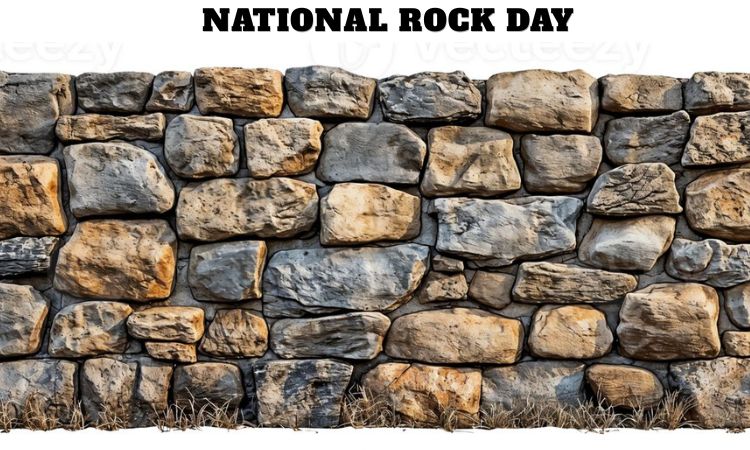
National Rock Day is celebrated every year on July 13 as a special occasion dedicated to appreciating rocks, minerals, geology, and the natural formations that shape our planet. Rocks are among the oldest materials found on Earth and provide valuable information about the history of our planet, ancient environments, and the processes that have changed landscapes over millions of years. This day encourages people of all ages to explore the fascinating world of rocks, learn about geology, and recognize the importance of these natural resources in everyday life.
From mountains and cliffs to gemstones and construction materials, rocks are an essential part of human civilization and the natural environment. They have influenced architecture, technology, art, and scientific discoveries throughout history. National Rock Day offers an opportunity to look beyond ordinary stones found on the ground and understand the incredible stories hidden within them. Every rock has a unique formation process, chemical composition, and connection to Earth’s past.
What Is National Rock Day and Why Is It Celebrated on July 13?
National Rock Day is a celebration that highlights the beauty, diversity, and importance of rocks. Observed annually on July 13, the day inspires people to appreciate geological wonders and develop an interest in Earth sciences. Although rocks may appear simple, they are complex structures formed through natural processes that can take thousands, millions, or even billions of years.
The celebration focuses on increasing awareness about different types of rocks, including igneous, sedimentary, and metamorphic rocks. It also encourages activities such as rock collecting, studying minerals, visiting geological sites, and learning about how rocks contribute to ecosystems and human development.
The exact origin of National Rock Day is not widely documented, but the occasion has gained popularity among geology enthusiasts, educators, students, and nature lovers. It serves as a reminder that rocks are not just lifeless objects but important records of Earth’s evolution.
How Did Rocks Become an Important Part of Earth’s History?
Rocks are considered the foundation of Earth because they preserve evidence of geological events that occurred long before humans existed. Scientists study rocks to understand the formation of continents, climate changes, volcanic activity, and the evolution of life on Earth.
The oldest rocks discovered on Earth are more than four billion years old. These ancient formations provide clues about the early conditions of our planet. Fossils preserved in sedimentary rocks help researchers understand prehistoric plants, animals, and environments.
Throughout history, humans have depended on rocks for survival and development. Early civilizations used stones to create tools, build shelters, and develop weapons. Later, rocks became essential materials for roads, buildings, monuments, and industrial production. Even today, rocks and minerals are used in electronics, transportation, energy production, and countless other industries.
What Are the Different Types of Rocks Found on Earth?
Earth’s rocks are generally divided into three major categories based on how they are formed: igneous rocks, sedimentary rocks, and metamorphic rocks.
Igneous rocks are created when molten rock, known as magma or lava, cools and becomes solid. These rocks can form beneath Earth’s surface or after volcanic eruptions. Granite and basalt are common examples of igneous rocks.
Sedimentary rocks develop from layers of sediment, including small pieces of rocks, minerals, and organic materials that accumulate over time. Pressure and natural processes transform these sediments into solid rock. Limestone, sandstone, and shale are examples of sedimentary rocks. Many fossils are found within sedimentary formations because they preserve remains of ancient organisms.
Metamorphic rocks are formed when existing rocks experience intense heat, pressure, or chemical changes without melting completely. These conditions transform the original rock into a new type. Marble and slate are examples of metamorphic rocks.
Each type of rock provides important information about Earth’s processes and helps scientists understand the planet’s continuous changes.
Why Are Rocks Important for Human Life and the Environment?
Rocks play a vital role in supporting life and maintaining Earth’s natural systems. They provide minerals that plants need for growth and contribute to the formation of soil. Without rocks breaking down over time, fertile soil would not develop, making agriculture difficult.
Many industries rely on rocks and minerals for manufacturing and construction. Materials such as granite, limestone, and sandstone are widely used in buildings, roads, and infrastructure. Metals extracted from rocks are essential for producing vehicles, computers, smartphones, and other modern technologies.
Rocks also influence landscapes and ecosystems. Mountains, caves, valleys, and cliffs create habitats for various plants and animals. Geological formations shape rivers, control groundwater movement, and contribute to natural beauty around the world.
Beyond practical uses, rocks have cultural and artistic value. Precious stones and minerals have been used in jewelry, decorations, and artwork for centuries. Many famous landmarks around the world exist because of unique geological formations.
How Can People Celebrate National Rock Day on July 13?
People can celebrate National Rock Day in many educational and enjoyable ways. One of the simplest activities is exploring nature and observing different types of rocks found in local areas. Collecting interesting stones and researching their origins can help develop a deeper understanding of geology.
Students and teachers can organize classroom activities focused on rock identification, mineral studies, and Earth science experiments. Museums, geological parks, and science centers often provide opportunities to learn about fossils, gemstones, and rock formations.
Families can spend time outdoors visiting mountains, beaches, hiking trails, or natural areas where unique rocks can be discovered. Creating a personal rock collection, painting stones, or making geological displays are creative ways to celebrate the day.
Another meaningful way to observe National Rock Day is by learning about conservation. Protecting natural landscapes and respecting geological sites helps preserve these valuable resources for future generations.
What Are Some Interesting Facts About Rocks?
Rocks contain fascinating facts that reveal the complexity of Earth’s history. Some rocks are older than the dinosaurs and have existed since the early stages of the planet. Diamonds, one of the most valuable gemstones, are formed deep inside Earth under extreme pressure and temperature conditions.
The Earth’s crust is constantly changing because of processes such as erosion, volcanic activity, and tectonic movement. A single rock can transform from one type into another over millions of years through the rock cycle.
Some rocks can float on water because they contain trapped air bubbles. Pumice, a volcanic rock, is a famous example. Certain rocks also contain fossils that provide evidence about ancient life forms and environments.
The study of rocks, known as geology, helps scientists predict natural events, discover resources, and understand the history of Earth.
How Does Studying Rocks Help Scientists Understand the Planet?
Studying rocks allows scientists to investigate Earth’s past and predict future changes. Geological research helps experts understand earthquakes, volcanic eruptions, climate patterns, and the movement of continents.
Rocks act like natural archives because they preserve chemical and physical evidence from different periods of Earth’s history. By analyzing rock layers, scientists can determine how landscapes have changed over time.
Geologists also study rocks to locate valuable resources such as minerals, metals, and fossil fuels. Their research supports industries, environmental protection, and scientific discoveries.
Modern technology has made rock analysis more advanced, allowing researchers to study tiny mineral structures and understand geological processes in greater detail.
How Can Children Learn About Rocks on National Rock Day?
National Rock Day is an excellent opportunity for children to explore science through hands-on activities. Children can start by collecting different rocks, comparing their textures, colors, and shapes, and learning how each one forms.
Simple experiments, such as observing how rocks change through weathering or creating a homemade rock collection chart, can make learning enjoyable. Books, educational videos, and visits to science museums can also help children develop curiosity about geology.
Teaching children about rocks encourages interest in science, nature, and environmental responsibility. It helps them understand that even small stones have important stories about the planet.
Why Should Everyone Appreciate Rocks on National Rock Day?
Rocks are often overlooked because they are common parts of the environment, but they hold extraordinary scientific, historical, and cultural importance. National Rock Day reminds people to recognize the hidden value of these natural treasures.
Every landscape, building, and natural resource has a connection to rocks. They support ecosystems, provide materials for human progress, and preserve evidence of Earth’s incredible journey.
Celebrating National Rock Day on July 13 is a chance to develop curiosity, respect nature, and discover the remarkable world beneath our feet.
Frequently Asked Questions (FAQs)
1. When is National Rock Day celebrated?
National Rock Day is celebrated every year on July 13. The day recognizes the importance of rocks, minerals, geology, and the role rocks play in Earth’s history and human life.
2. What is the purpose of National Rock Day?
The purpose of National Rock Day is to encourage people to learn about rocks, appreciate geological formations, and understand the importance of natural resources.
3. Who celebrates National Rock Day?
National Rock Day is celebrated by geology enthusiasts, students, teachers, nature lovers, scientists, and anyone interested in learning about Earth’s natural history.
4. What are the three main types of rocks?
The three main types of rocks are igneous rocks, sedimentary rocks, and metamorphic rocks. They are classified based on their formation processes.
5. How can I celebrate National Rock Day?
People can celebrate by collecting rocks, visiting geological sites, learning about minerals, conducting science activities, or exploring nature.
6. Why are rocks important to humans?
Rocks provide materials for construction, technology, and industries. They also supply minerals, support ecosystems, and help scientists study Earth’s history.
7. Are rocks living things?
No, rocks are not living things. However, they are important parts of Earth’s systems and contribute to natural processes that support life.
8. What is the oldest rock on Earth?
Some of the oldest known rocks on Earth are more than four billion years old and provide information about the early history of the planet.
9. What science studies rocks?
The science that studies rocks, minerals, and Earth’s structure is called geology.
10. Can children participate in National Rock Day activities?
Yes, children can participate through rock collecting, science projects, educational games, and learning about different types of rocks.