
What Is Solomon Islands Independence Day and Why Is It Celebrated on July 7?
Solomon Islands Independence Day is celebrated every year on July 7 to commemorate the nation’s independence from the United Kingdom in 1978. This important national holiday marks the beginning of self-governance for the Solomon Islands and symbolizes the country’s journey toward political freedom, cultural pride, and national unity.
For the people of the Solomon Islands, Independence Day is much more than a historical anniversary. It is a day of patriotism, reflection, and celebration, honoring the sacrifices and determination of those who worked to achieve independence. Citizens gather across the islands to participate in ceremonies, parades, cultural performances, sporting events, community feasts, and family gatherings that showcase the nation’s rich traditions and diverse heritage.
The Solomon Islands consist of nearly 1,000 islands in the South Pacific Ocean, each contributing unique customs, languages, music, and cultural practices. Independence Day provides an opportunity to celebrate this diversity while strengthening the shared identity of the nation.
Every July 7, government officials, community leaders, schools, businesses, and citizens come together to recognize the country’s achievements since independence and renew their commitment to building a prosperous future.
How Did Solomon Islands Gain Independence?
Before gaining independence, the Solomon Islands were administered as the British Solomon Islands Protectorate for many decades. British influence began in the late nineteenth century when the islands became a protectorate in 1893. During this period, Britain managed the territory’s administration while local communities maintained many of their traditional customs and governance systems.
Following the end of the Second World War, political awareness and aspirations for self-government gradually increased. Educational opportunities expanded, local leaders emerged, and discussions about constitutional reforms gained momentum throughout the 1960s and 1970s.
The British government introduced several constitutional changes that allowed greater participation by Solomon Islanders in governing their own country. These reforms eventually paved the way for full independence.
On July 7, 1978, the Solomon Islands officially became an independent sovereign nation while remaining a member of the Commonwealth of Nations. Independence marked a peaceful transition that allowed the country to establish its own democratic government while maintaining friendly diplomatic relations with the United Kingdom and other Commonwealth nations.
This milestone remains one of the most significant events in the country’s modern history.
Why Is Solomon Islands Independence Day Important?
Independence Day represents freedom, national identity, and self-determination. It reminds citizens that the future of the country rests in their own hands and highlights the importance of unity among the many islands and cultural groups that make up the nation.
The celebration encourages people to reflect on the country’s achievements in governance, education, healthcare, infrastructure, and economic development while recognizing the challenges that remain.
The holiday also strengthens national pride by highlighting the traditions, languages, music, and customs that make the Solomon Islands unique. It reminds younger generations of the importance of preserving their cultural heritage while embracing opportunities for progress and innovation.
For many citizens, Independence Day is also an occasion to honor community leaders, veterans, educators, healthcare workers, and public servants who contribute to the country’s growth and stability.
What Is the History of the Solomon Islands Before Independence?
The Solomon Islands have a history that stretches back thousands of years. Archaeological evidence suggests that the islands were first settled by Melanesian peoples long before European exploration reached the Pacific.
Spanish explorer Álvaro de Mendaña visited the islands in 1568, believing they contained great wealth similar to the biblical mines of King Solomon, which inspired the name “Solomon Islands.”
Centuries later, European missionaries, traders, and colonial administrators established stronger connections with the islands. In 1893, Britain declared much of the archipelago a protectorate, leading to decades of colonial administration.
During World War II, the Solomon Islands became one of the Pacific theater’s most important battlegrounds. The Battle of Guadalcanal remains one of the war’s most significant campaigns, bringing lasting historical importance to the islands.
Following the war, political reforms accelerated, eventually leading to independence in 1978.
Today, the nation honors both its ancient cultural traditions and its modern democratic institutions.
How Is Solomon Islands Independence Day Celebrated?
Solomon Independence Day is celebrated throughout the country with colorful events that reflect both national pride and cultural diversity.
Government ceremonies often begin the day’s celebrations with the raising of the national flag, speeches by political leaders, and performances of the national anthem.
Communities organize:
- Parades featuring schools, police, military personnel, and local organizations
- Traditional music and dance performances
- Cultural exhibitions
- Sports competitions
- Community feasts
- Church services
- Art and craft displays
- Youth activities
- Traditional canoe events in some coastal communities
- Public entertainment and concerts
Families gather to enjoy traditional foods, share stories about the country’s history, and celebrate with neighbors.
Schools often organize educational programs that teach students about the nation’s journey to independence, helping preserve historical knowledge for future generations.
What Are the National Symbols of the Solomon Islands?
Independence Day provides an opportunity to celebrate the country’s important national symbols.
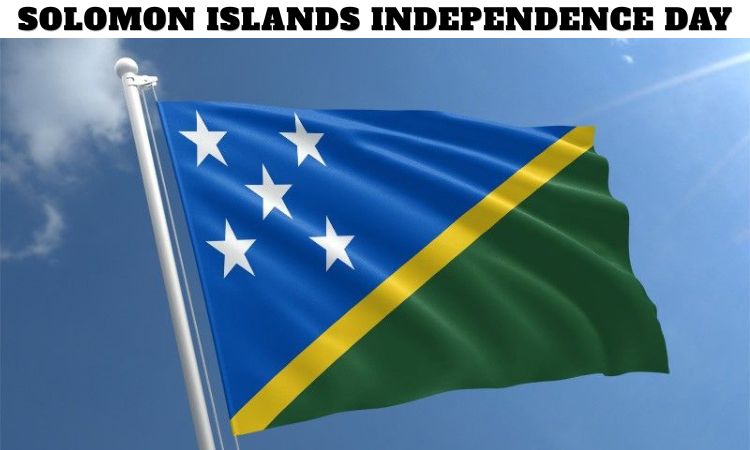
The national flag features blue, green, and yellow colors with five white stars representing the country’s island groups.
The national anthem, “God Save Our Solomon Islands,” expresses hope, unity, peace, and national pride.
The country’s coat of arms includes symbols representing traditional culture, wildlife, and the natural environment.
These national symbols remind citizens of the country’s identity, shared values, and aspirations for continued development.
Displaying the flag during Independence Day celebrations demonstrates respect for the nation’s history and future.
What Makes the Solomon Islands Unique?
The Solomon Islands are among the most culturally diverse countries in the Pacific.
Some remarkable characteristics include:
- Nearly 1,000 islands spread across the South Pacific.
- More than 70 living languages are spoken throughout the country.
- Rich Melanesian cultural traditions remain strong in many communities.
- Stunning coral reefs attract divers from around the world.
- Dense tropical rainforests support unique wildlife.
- Traditional wood carving, weaving, and canoe building continue to thrive.
- Fishing and agriculture remain important parts of daily life.
- Many villages maintain customs passed down through generations.
This extraordinary cultural and environmental diversity makes Independence Day an especially meaningful occasion for celebrating the nation’s heritage.
How Has the Solomon Islands Developed Since Independence?
Since achieving independence in 1978, the Solomon Islands has made progress in several important areas.
The country has strengthened its democratic institutions, expanded educational opportunities, improved healthcare services, and developed international partnerships with neighboring Pacific nations and the global community.
Economic growth has been supported by industries such as:
- Agriculture
- Fisheries
- Forestry
- Tourism
- Small-scale manufacturing
- International trade
Infrastructure improvements have expanded transportation, communication, and public services across many islands.
Although the country continues to face challenges such as climate change, natural disasters, and geographic isolation, national efforts remain focused on sustainable development and improving the quality of life for all citizens.
Independence Day serves as a reminder of both the achievements made and the goals still ahead.
How Can People Celebrate Solomon Islands Independence Day?
People can celebrate this important national holiday in many meaningful ways.
Some ideas include:
- Learning about the history of the Solomon Islands.
- Reading about the country’s independence movement.
- Exploring traditional Solomon Islands music and dance.
- Cooking Pacific Island-inspired dishes.
- Watching documentaries about the country’s culture and history.
- Visiting museums or cultural exhibitions featuring Pacific heritage.
- Sharing educational content about the significance of July 7.
- Supporting organizations working to preserve Pacific Island cultures.
- Teaching children about the importance of national independence.
- Reflecting on the values of freedom, unity, and cultural diversity.
These activities help promote greater appreciation for one of the Pacific’s most fascinating nations.
Why Does Solomon Islands Independence Day Continue to Inspire National Pride?
Independence Day remains one of the country’s most cherished national celebrations because it represents resilience, unity, and hope.
Every year, July 7 reminds citizens that their nation successfully achieved peaceful self-government while preserving its unique cultural identity. It celebrates the strength found in diversity, as hundreds of islands and numerous language groups come together under one national flag.
The observance also encourages future generations to contribute to their country’s continued success through education, community service, environmental stewardship, and responsible leadership.
As the Solomon Islands continues to grow and develop, Independence Day remains a powerful symbol of freedom, national unity, and optimism for the future.
Solomon Islands Independence Day, observed annually on July 7, is a proud celebration of freedom, unity, and national identity. It commemorates the peaceful transition to independence in 1978 and honors the resilience, cultural richness, and aspirations of the Solomon Islands people. Through flag-raising ceremonies, parades, traditional performances, community gatherings, and educational events, citizens reflect on their shared history while looking toward a future of sustainable growth and prosperity. The holiday serves as a reminder that preserving cultural heritage, strengthening democratic values, and fostering national unity are essential to the continued success of this remarkable Pacific island nation.
Frequently Asked Questions (FAQs)
1. When is Solomon Islands Independence Day celebrated?
Solomon Islands Independence Day is celebrated every year on July 7.
2. Why is Solomon Islands Independence Day celebrated?
It commemorates the country’s independence from the United Kingdom on July 7, 1978.
3. Who ruled the Solomon Islands before independence?
The islands were administered by the United Kingdom as the British Solomon Islands Protectorate.
4. Is Solomon Islands a member of the Commonwealth?
Yes. The Solomon Islands remains a member of the Commonwealth of Nations after gaining independence.
5. What is the capital of the Solomon Islands?
The capital city is Honiara, located on Guadalcanal Island.
6. How do people celebrate Solomon Islands Independence Day?
People celebrate with parades, flag ceremonies, cultural performances, sporting events, church services, community feasts, and educational activities.
7. Why is July 7 important in Solomon Islands history?
July 7 marks the day the Solomon Islands became an independent nation in 1978.
8. How many islands make up the Solomon Islands?
The country consists of nearly 1,000 islands, many of which are inhabited.
9. What languages are spoken in the Solomon Islands?
English is the official language, while Solomon Islands Pijin and many indigenous languages are widely spoken.
10. Why is Independence Day significant for Solomon Islanders?
It celebrates freedom, national unity, cultural heritage, and the country’s achievements since becoming an independent nation.