

What Is Venezuela Independence Day?
Venezuela Independence Day, celebrated annually on July 5, commemorates the historic day in 1811 when Venezuela declared its independence from the Spanish Empire. It is one of the country’s most important national holidays, honoring the courage, determination, and sacrifices of the leaders and citizens who sought freedom and self-governance.
On July 5, 1811, representatives of seven Venezuelan provinces signed the Venezuelan Declaration of Independence, making Venezuela one of the first Spanish colonies in South America to formally declare independence. Although achieving complete independence required years of military struggle, the declaration marked the beginning of a new chapter in the nation’s history.
Today, Venezuela Independence Day is observed with patriotic ceremonies, military parades, cultural events, concerts, educational activities, and displays of the national flag. The holiday reminds Venezuelans of their shared history, national identity, and the enduring importance of freedom and sovereignty.
Why Is Venezuela Independence Day Celebrated on July 5?
Venezuela celebrates Independence Day on July 5 because it marks the signing of the Declaration of Independence in 1811. On this day, delegates from the provinces of Caracas, Cumaná, Barinas, Margarita, Barcelona, Mérida, and Trujillo voted to sever political ties with Spain and establish an independent republic.
The declaration represented a bold step toward self-rule at a time when much of Latin America was still under colonial control. While Spain attempted to regain authority in the years that followed, July 5 remains the symbolic birth of the Venezuelan nation.
The holiday recognizes the ideals of liberty, democracy, and national unity that inspired the independence movement and continues to serve as a reminder of the country’s struggle for self-determination.
How Did Venezuela’s Fight for Independence Begin?
The road to independence was shaped by political, economic, and social developments in the late eighteenth and early nineteenth centuries. Enlightenment ideas about liberty and equality, along with the success of the American Revolution and the French Revolution, influenced many leaders across Latin America.
In 1808, Spain faced political instability after the invasion by Napoleon Bonaparte. This weakened Spanish authority in its colonies and encouraged local leaders in Venezuela to seek greater autonomy.
On April 19, 1810, a movement in Caracas removed the Spanish governor and established a local governing junta. This event is often regarded as the beginning of Venezuela’s independence movement. Just over a year later, the Congress of Venezuela adopted the Declaration of Independence on July 5, 1811.
Although the declaration was a significant milestone, independence was not immediately secured. Years of conflict followed before Spain’s control was finally defeated.
Who Were the Key Leaders of Venezuela’s Independence Movement?
Several influential figures played vital roles in Venezuela’s fight for independence.
The most famous is Simón Bolívar, widely known as “El Libertador” or “The Liberator.” Bolívar became one of the greatest military and political leaders in Latin American history. His leadership extended beyond Venezuela, contributing to the independence of present-day Colombia, Ecuador, Peru, Bolivia, and Panama.
Another important figure was Francisco de Miranda, often called the Precursor of Independence. Miranda spent decades promoting the idea of an independent Latin America and helped inspire revolutionary movements throughout the region.
Other notable contributors included:
- Antonio José de Sucre
- José Félix Ribas
- Santiago Mariño
- Manuel Piar
- Cristóbal Mendoza, the first President of Venezuela
These leaders, along with countless soldiers and civilians, made significant sacrifices in pursuit of independence.
What Is the Venezuelan Declaration of Independence?
The Declaration of Independence of Venezuela is the document through which the country’s representatives officially proclaimed separation from Spanish rule.
Signed on July 5, 1811, it declared that the Venezuelan provinces had the right to govern themselves and rejected the authority of the Spanish Crown.
The declaration emphasized several important principles:
- National sovereignty.
- Political freedom.
- Equality before the law.
- Self-government.
- Protection of individual rights.
- The rejection of colonial rule.
The document remains one of the most important symbols of Venezuela’s national identity and democratic aspirations.
How Was Venezuela’s Independence Finally Achieved?
Although independence was declared in 1811, Spain regained control over much of Venezuela during the following years. The struggle for freedom continued through a series of military campaigns.
A decisive moment came at the Battle of Carabobo on June 24, 1821, where Simón Bolívar’s forces achieved a major victory over the Spanish royalist army. This battle effectively secured Venezuela’s independence and is considered one of the most important events in the country’s history.
Following the victory, Venezuela became part of Gran Colombia, a republic that also included present-day Colombia, Ecuador, and Panama. Venezuela later became an independent republic in 1830 after the dissolution of Gran Colombia.
How Is Venezuela Independence Day Celebrated Today?
Venezuela Independence Day is observed with patriotic celebrations across the country.
Common activities include:
- Military parades.
- Flag-raising ceremonies.
- National anthem performances.
- Official government speeches.
- Historical reenactments.
- Cultural festivals.
- Traditional music concerts.
- Folk dance performances.
- Fireworks displays.
- Community gatherings.
Schools often organize educational programs that teach students about the country’s independence movement and the lives of national heroes. Museums and cultural institutions may host exhibitions featuring historical documents, artwork, and artifacts from the independence era.
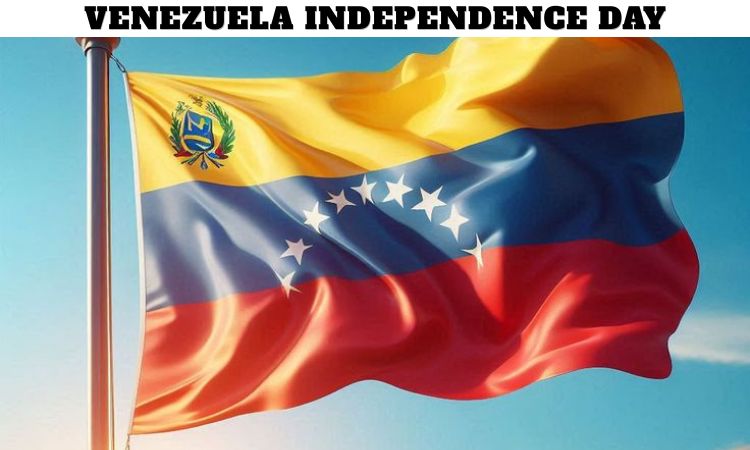
The Venezuelan flag is displayed prominently on homes, public buildings, and streets, reflecting national pride and unity.
What Symbols Represent Venezuela’s Independence?
Several national symbols are closely associated with Venezuela Independence Day.
These include:
- The national flag.
- The national coat of arms.
- The national anthem, “Gloria al Bravo Pueblo.”
- Statues of Simón Bolívar.
- Historical monuments.
- Independence memorials.
- Military honors.
- Patriotic colors of yellow, blue, and red.
Public ceremonies often feature wreath-laying events at monuments dedicated to the heroes of independence, emphasizing respect for the country’s history and those who fought for freedom.
Why Is Simón Bolívar So Important to Venezuela?
Simón Bolívar occupies a unique place in Venezuelan history because of his leadership during the wars of independence.
His vision extended beyond Venezuela, as he believed in creating a united and independent South America capable of defending its sovereignty and promoting regional cooperation.
Bolívar’s achievements include:
- Leading successful military campaigns.
- Promoting republican government.
- Advocating for political unity.
- Supporting constitutional governance.
- Inspiring independence movements across Latin America.
His legacy is commemorated through monuments, museums, educational institutions, public holidays, and the country’s official name, the Bolivarian Republic of Venezuela.
What Foods Are Enjoyed During Venezuela Independence Day Celebrations?
National holidays often bring families together to enjoy traditional Venezuelan cuisine.
Popular dishes include:
- Arepas.
- Pabellón criollo.
- Hallacas.
- Empanadas.
- Cachapas.
- Tequeños.
- Asado negro.
- Tostones.
- Arroz con pollo.
- Quesillo.
Traditional beverages and desserts are also served during family gatherings, community celebrations, and cultural festivals.
Sharing meals reinforces family bonds while celebrating Venezuelan heritage.
What Are Some Interesting Facts About Venezuela Independence Day?
Venezuela Independence Day has many fascinating historical connections.
Interesting facts include:
- Independence was declared on July 5, 1811.
- Venezuela was among the first Spanish colonies in South America to declare independence.
- Simón Bolívar became one of Latin America’s greatest liberators.
- Francisco de Miranda helped inspire the independence movement.
- The Battle of Carabobo secured Venezuela’s freedom in 1821.
- Venezuela later became part of Gran Colombia.
- July 5 is one of Venezuela’s most important national holidays.
- Military parades are a major feature of the celebration.
- Schools teach the history of independence through special programs.
- The national flag is displayed throughout the country during the holiday.
Why Does Venezuela Independence Day Continue to Matter Today?
Venezuela Independence Day remains a powerful reminder of the values that inspired the nation’s founders: freedom, sovereignty, courage, and unity.
The holiday encourages citizens to reflect on their shared history, appreciate the sacrifices made by earlier generations, and preserve the country’s cultural and historical heritage.
It also serves as an opportunity to educate younger generations about the importance of democracy, civic responsibility, and national identity.
By commemorating July 5 each year, Venezuelans honor not only a historic declaration but also the enduring spirit of a people determined to shape their own future.
Frequently Asked Questions (FAQs)
1. When is Venezuela Independence Day celebrated?
Venezuela Independence Day is celebrated every year on July 5.
2. What happened on July 5, 1811?
Representatives of seven Venezuelan provinces signed the Declaration of Independence, officially declaring independence from Spain.
3. Who was Simón Bolívar?
Simón Bolívar was a Venezuelan military and political leader who played a key role in the independence of several South American countries.
4. Why is Venezuela Independence Day important?
It commemorates the beginning of Venezuela’s journey toward freedom, sovereignty, and self-government.
5. How is Venezuela Independence Day celebrated?
The holiday is celebrated with military parades, cultural festivals, flag ceremonies, concerts, educational programs, and family gatherings.
6. What was the Battle of Carabobo?
The Battle of Carabobo, fought in 1821, was a decisive victory that secured Venezuela’s independence from Spanish rule.
7. Who was Francisco de Miranda?
Francisco de Miranda was an early revolutionary leader whose ideas and efforts helped inspire Venezuela’s independence movement.
8. What foods are commonly enjoyed on Venezuela Independence Day?
Traditional dishes include arepas, pabellón criollo, empanadas, cachapas, tequeños, hallacas, and quesillo.
9. What are the colors of the Venezuelan flag?
The Venezuelan flag features yellow, blue, and red horizontal stripes with stars across the blue band.
10. Why does Venezuela Independence Day continue to be significant?
It honors the country’s fight for independence, celebrates national identity, and reminds citizens of the importance of freedom and sovereignty.