

What Is 228 Memorial Day and Why Is February 28 So Significant?
228 Memorial Day, observed annually on February 28, commemorates the victims of the February 28 Incident that occurred in 1947 in Taiwan. This day stands as one of the most solemn and historically transformative moments in Taiwanese history. It marks a period of political unrest, violent suppression, and the beginning of decades of authoritarian rule that profoundly shaped Taiwan’s political and social identity.
We recognize 228 Memorial Day not only as a remembrance of tragedy but also as a powerful symbol of democratic transformation, reconciliation, and national reflection. It serves as a reminder of the importance of transparency, human rights, and civic participation in safeguarding democracy.
What Happened During the February 28 Incident in 1947?
The February 28 Incident, often referred to as the 228 Incident, began with a confrontation between government officials and a civilian cigarette vendor in Taipei on February 27, 1947. The dispute escalated when enforcement officers from the Monopoly Bureau confiscated contraband cigarettes and reportedly assaulted the vendor. A bystander was shot during the unrest that followed, igniting widespread protests across the island.
At the time, Taiwan had recently transitioned from Japanese colonial rule to administration by the Republic of China government following the end of World War II. Tensions had already been rising due to corruption, economic instability, inflation, and administrative mismanagement. The February 28 confrontation acted as a catalyst for island-wide demonstrations demanding reforms and accountability.
The government’s response was swift and severe. Military reinforcements were dispatched from mainland China, and a brutal crackdown ensued. Thousands of civilians, including intellectuals, community leaders, and students, were arrested, imprisoned, or executed. The precise number of casualties remains debated, but historians estimate that between 10,000 and 30,000 people lost their lives during the suppression.
How Did the 228 Incident Shape Taiwan’s Political Future?
The aftermath of the 228 Incident marked the beginning of a prolonged era of martial law in Taiwan known as the “White Terror.” For nearly four decades, political dissent was suppressed, civil liberties were curtailed, and surveillance became a defining feature of governance.
The trauma of 228 deeply influenced Taiwan’s collective consciousness. Families of victims endured decades of silence, stigma, and injustice. Public discussion of the incident was forbidden until the late 1980s when Taiwan began transitioning toward democracy.
As democratic reforms unfolded, public acknowledgment of the February 28 Incident became central to Taiwan’s reconciliation efforts. In 1995, then-President Lee Teng-hui formally apologized to the victims’ families on behalf of the government. February 28 was officially designated as a national day of remembrance, institutionalizing the process of historical reckoning.
Why Is 228 Memorial Day a Public Holiday in Taiwan?
228 Memorial Day is recognized as a national public holiday in Taiwan. Government offices, schools, and many businesses close to allow citizens to participate in commemorative events and reflect on the historical significance of the day.
The establishment of the holiday symbolizes Taiwan’s commitment to confronting its past. Rather than erasing difficult chapters, Taiwan integrates remembrance into its national identity. The day emphasizes themes of justice, reconciliation, historical awareness, and democratic values.
Public ceremonies often include moments of silence, official speeches, and wreath-laying at memorial sites. Educational institutions conduct lectures and exhibitions to ensure that younger generations understand the historical context and its relevance to contemporary civic life.
What Role Does the 228 Peace Memorial Park Play in Commemoration?
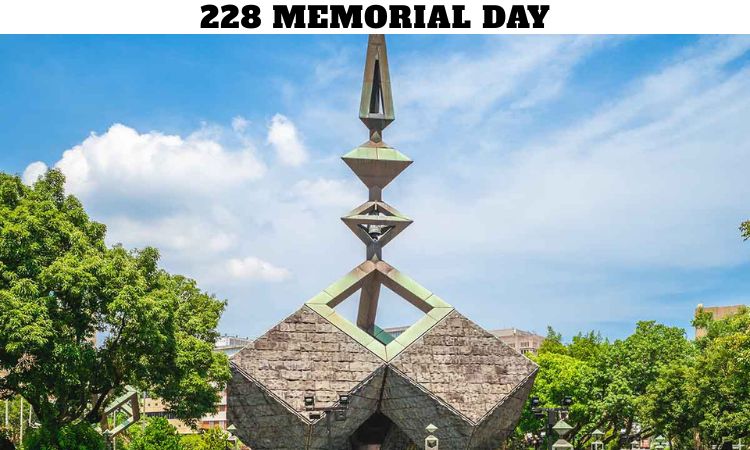
One of the central sites of remembrance is the 228 Peace Memorial Park in Taipei. Located in the heart of the capital, this park was once a focal point of the unrest in 1947. Today, it houses monuments and a museum dedicated to documenting the February 28 Incident.
The 228 National Memorial Museum, situated within the park, preserves archival records, personal testimonies, and historical documents that provide detailed insight into the events of 1947 and the subsequent White Terror period. Through exhibitions and educational programs, the museum reinforces the importance of transparency and collective memory.
The transformation of this public space into a memorial reflects Taiwan’s broader democratic journey—from repression to openness, from silence to public acknowledgment.
How Does 228 Memorial Day Promote Transitional Justice?
Transitional justice remains a central theme of 228 Memorial Day. Over the decades, Taiwan has taken concrete steps to address historical injustices. These measures include:
Official government apologies
Compensation for victims’ families
Declassification of historical archives
Removal of authoritarian symbols
Establishment of investigative commissions
These actions reflect a commitment to restorative justice rather than mere symbolic gestures. By confronting the past directly, Taiwan strengthens its democratic institutions and reinforces public trust.
The process demonstrates how nations can evolve by acknowledging wrongdoing, compensating victims, and ensuring institutional reforms that prevent recurrence.
Why Is 228 Memorial Day Important for Democracy and Human Rights?
The lessons of the February 28 Incident extend beyond Taiwan’s borders. The events highlight the dangers of unchecked authority, lack of accountability, and suppression of dissent.
228 Memorial Day reinforces the foundational principles of democracy:
Protection of civil liberties
Freedom of speech and assembly
Transparent governance
Rule of law
Respect for human dignity
By commemorating victims annually, Taiwan underscores that democracy must be actively maintained and defended. Remembrance becomes a civic duty, ensuring that history informs present and future policymaking.
How Is 228 Memorial Day Observed Across Taiwan?
Observances vary across regions but often include:
National remembrance ceremonies attended by political leaders
Public lectures and academic conferences
Cultural performances honoring victims
Educational programming in schools
Community gatherings and memorial services
In recent years, digital platforms and documentaries have expanded awareness among younger generations. Storytelling initiatives have helped families share personal narratives, ensuring that historical memory remains vivid and human-centered.
Through these collective acts, society fosters empathy, understanding, and a deeper appreciation for democratic resilience.
What Lessons Does the 228 Incident Teach Future Generations?
The enduring relevance of 228 Memorial Day lies in its lessons. The February 28 Incident teaches that:
Government accountability is essential for social stability.
Civil unrest often reflects deeper structural issues.
Silencing public grievances can escalate conflict.
Historical transparency strengthens national unity.
Democracy requires continuous civic engagement.
By embedding these lessons into public discourse, Taiwan ensures that remembrance translates into constructive civic responsibility.
How Has International Recognition Influenced the Day’s Significance?
While 228 Memorial Day is a national observance, its themes resonate internationally. Scholars, historians, and human rights organizations frequently reference Taiwan’s transitional justice process as a case study in democratic evolution.
Global conversations about authoritarianism, historical memory, and reconciliation find resonance in Taiwan’s experience. The 228 Incident has become part of broader academic discussions on post-conflict healing and democratic consolidation.
Why Does 228 Memorial Day Continue to Matter Today?
More than seven decades after 1947, 228 Memorial Day remains profoundly relevant. It serves as a moral compass guiding Taiwan’s democratic institutions. The day reinforces national identity rooted not in denial of history, but in courageous acknowledgment of it.
Modern Taiwan stands as a vibrant democracy in East Asia. Its transformation from authoritarian rule to democratic governance underscores the power of civic determination and institutional reform. The remembrance of 228 ensures that the sacrifices of the past continue to inform the principles of the present.
As citizens gather each February 28, they reaffirm a shared commitment to justice, transparency, andAs citizens gather each February 28, they reaffirm a shared commitment to justice, transparency, and human dignity. Memory becomes not only a tribute to those lost but also a pledge to future generations.
Conclusion: A Day of Remembrance, Reflection, and Renewal
228 Memorial Day – February 28 stands as one of the most significant commemorative days in Taiwan’s national calendar. It honors victims, confronts historical injustice, and reinforces democratic ideals. Through public ceremonies, educational initiatives, and ongoing transitional justice efforts, Taiwan transforms remembrance into resilience.