

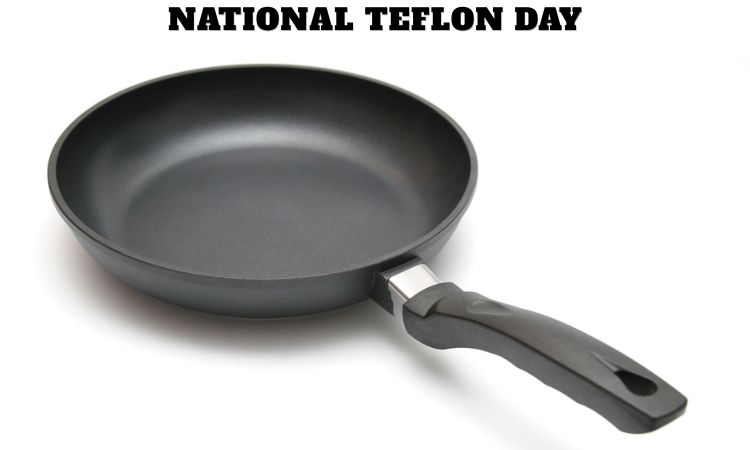
What Is National Teflon Day and Why Is It Celebrated?
National Teflon Day, observed on April 6, commemorates one of the most significant accidental discoveries in modern science—the invention of Teflon. This day celebrates innovation, scientific curiosity, and the profound impact that a single material can have across industries and daily life.
Teflon is widely known for its nonstick properties, but its applications go far beyond cookware. From aerospace engineering to medical devices, Teflon has revolutionized how materials are used in extreme environments. National Teflon Day honors both the material itself and the scientific breakthrough that brought it into existence.
How Was Polytetrafluoroethylene Discovered?
Teflon, scientifically known as polytetrafluoroethylene (PTFE), was discovered accidentally in 1938 by Roy Plunkett, a chemist working for DuPont.
Plunkett was experimenting with refrigerant gases when he noticed that a gas sample had polymerized into a white, waxy solid inside a pressurized container. This unexpected substance turned out to have remarkable properties—it was highly resistant to heat, chemicals, and friction.
What began as an accident quickly became a groundbreaking innovation, leading to the development of Teflon as a versatile industrial material.
Why Is April 6 Significant for National Teflon Day?
April 6 is believed to be associated with the patenting and recognition of Teflon’s unique properties. While the exact reason for choosing this date is not universally documented, it aligns with the broader acknowledgment of Teflon’s discovery and its importance in scientific history.
The day serves as a reminder of how unexpected discoveries can lead to revolutionary advancements that shape industries and everyday life.
What Are the Key Properties of Teflon?
Teflon’s widespread use is due to its unique combination of properties, which make it suitable for a variety of applications.
Key characteristics include:
- Nonstick surface
- High resistance to heat
- Chemical inertness
- Low friction
- Electrical insulation properties
These features make Teflon one of the most versatile synthetic materials ever created.
How Is Teflon Used in Everyday Life?
While most people associate Teflon with nonstick cookware, its applications extend far beyond the kitchen.
Common uses include:
- Nonstick coatings for pans and utensils
- Insulation for electrical wiring
- Components in the aerospace and automotive industries
- Medical devices and implants
- Industrial machinery parts
Its durability and resistance to extreme conditions make it an essential material in modern technology.
What Role Did Teflon Play in Historical Developments?
Teflon has played a crucial role in several major technological advancements. During World War II, it was used in the Manhattan Project to coat valves and seals exposed to highly reactive chemicals.
In the years that followed, Teflon became a key material in space exploration, particularly in equipment used by NASA. Its ability to withstand extreme temperatures and harsh conditions made it invaluable for spacecraft and satellite components.
These contributions highlight Teflon’s importance beyond consumer products.
How Is National Teflon Day Celebrated?
National Teflon Day is celebrated by science enthusiasts, educators, and industries that rely on advanced materials.
Common ways to observe the day include:
- Learning about the history of Teflon
- Exploring its applications in science and technology
- Conducting educational experiments
- Sharing information about innovation and discovery
- Recognizing the contributions of scientists and engineers
The day serves as an opportunity to inspire curiosity and appreciation for scientific breakthroughs.
What Are the Environmental Concerns Related to Teflon?
Despite its many benefits, Teflon has been associated with environmental and health concerns, particularly related to chemicals used in its production.
Key issues include:
- Persistence in the environment
- Potential health risks from certain compounds
- Challenges in disposal and recycling
In response, manufacturers have worked to develop safer production methods and reduce the use of harmful substances. Ongoing research continues to address these concerns while maintaining the material’s benefits.
How Has Teflon Evolved?
Since its discovery, Teflon has undergone significant development and refinement. Advances in manufacturing have improved its performance and expanded its applications.
Modern innovations include:
- Enhanced nonstick coatings
- Improved durability and safety
- Use in advanced medical technologies
- Integration into high-performance industrial systems
These advancements ensure that Teflon remains relevant in a rapidly changing technological landscape.
Why Is National Teflon Day Relevant Today?
National Teflon Day remains relevant because it highlights the importance of innovation and the role of science in improving everyday life.
It encourages people to:
- Appreciate scientific discoveries
- Understand the impact of materials science
- Support research and innovation
- Recognize the value of curiosity and experimentation
In a world driven by technology, Teflon stands as a symbol of how a single discovery can transform multiple industries.
What Lessons Can We Learn from the Discovery of Teflon?
The story of Teflon offers several valuable lessons:
- Accidental discoveries can lead to breakthroughs
- Curiosity and observation are key to innovation
- Scientific research has far-reaching impacts
- Collaboration between science and industry drives progress
These lessons continue to inspire scientists, engineers, and innovators around the world.
Frequently Asked Questions (FAQs)
1. What is National Teflon Day?
National Teflon Day is observed on April 6 to celebrate the discovery and impact of Teflon.
2. What is Teflon made of?
Teflon is made of polytetrafluoroethylene (PTFE), a synthetic polymer.
3. Who discovered Teflon?
Teflon was discovered by Roy Plunkett in 1938.
4. Why is Teflon nonstick?
Its molecular structure creates a low-friction surface that prevents substances from sticking.
5. Is Teflon safe to use?
Modern Teflon products are generally safe when used according to guidelines.
6. Where is Teflon used?
It is used in cookware, electronics, aerospace, medical devices, and industrial applications.
7. What makes Teflon unique?
Its heat resistance, chemical stability, and nonstick properties make it unique.
8. Are there environmental concerns with Teflon?
Yes, certain chemicals used in its production have raised environmental concerns.
9. How is National Teflon Day celebrated?
It is celebrated through education, awareness, and appreciation of scientific innovation.
10. Why is Teflon important today?
It remains essential in modern technology and everyday products.