

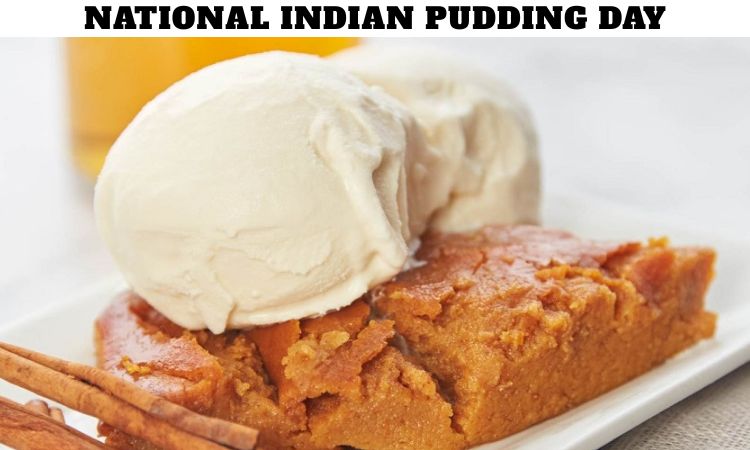
What Is National Indian Pudding Day, and Why Is It Observed on February 17?
National Indian Pudding Day, celebrated every year on February 17, honors one of the oldest and most traditional desserts in American culinary history—Indian pudding. This rich, slow-baked custard dessert represents a unique blend of Native American ingredients and early colonial cooking techniques. On this special day, we recognize not only the comforting flavors of Indian pudding but also its deep historical significance in shaping early American cuisine.
National Indian Pudding Day provides an opportunity to rediscover a dessert that may not dominate modern menus but remains a treasured part of New England’s heritage. With its warm spices, molasses sweetness, and creamy cornmeal texture, Indian pudding stands as a reminder of resilience, adaptation, and culinary creativity.
What Is Indian Pudding and What Are Its Main Ingredients?
Indian pudding is a traditional baked dessert made primarily from:
Cornmeal
Milk
Molasses
Butter
Eggs
Warm spices such as cinnamon, nutmeg, and ginger
The pudding is slowly baked for several hours, allowing the flavors to deepen and the texture to become smooth and custard-like. The result is a dessert that is hearty, comforting, and richly aromatic.
Unlike modern puddings that are often stovetop-prepared and smooth in texture, Indian pudding has a slightly grainy consistency due to the cornmeal. This unique texture is part of its charm and authenticity.
Why Is It Called “Indian” Pudding?
The name “Indian pudding” reflects its origins in early American colonial history. The term “Indian” refers to Native American influence, particularly the use of cornmeal, a staple ingredient introduced to European settlers by Indigenous peoples.
Before arriving in America, English settlers were accustomed to making hasty pudding, a porridge-like dish made from wheat or oats. However, wheat was scarce in the New World, so colonists adapted by using cornmeal instead. Over time, this adaptation evolved into the sweet baked dessert known as Indian pudding.
The name acknowledges the essential role Native Americans played in teaching settlers how to cultivate and cook corn.
How Did Indian Pudding Become a Colonial Staple?
Indian pudding became a household favorite in 17th- and 18th-century New England. Its ingredients were affordable, locally available, and well-suited to the harsh climate. Molasses, imported from the Caribbean through trade routes, became a common sweetener in colonial kitchens.
The dessert’s long baking time made it ideal for wood-fired ovens. Families would prepare the mixture in the morning and allow it to bake slowly throughout the day, filling homes with the comforting aroma of spices and molasses.
Because it was nourishing and satisfying, Indian pudding was often served during cold winter months, making February 17 a fitting time to celebrate this warming dish.
What Does Indian Pudding Taste Like?
Indian pudding offers a complex and deeply satisfying flavor profile. The dominant taste is the rich sweetness of molasses, balanced by warm spices and the creamy depth of milk and butter. The cornmeal adds body and texture, creating a dessert that feels substantial rather than light.
The spices—typically cinnamon and nutmeg—provide warmth, making each bite reminiscent of autumn and winter traditions. The slow baking process caramelizes the molasses, intensifying its flavor and giving the pudding a dark, glossy appearance.
Served warm, often with vanilla ice cream or whipped cream, Indian pudding becomes a comforting dessert that blends sweetness with rustic heartiness.
How Is Traditional Indian Pudding Prepared?
Preparing authentic Indian pudding requires patience and attention to detail. The process typically includes:
Scalding milk and gradually whisking in cornmeal.
Cook the mixture gently until slightly thickened.
Stir in molasses, butter, eggs, and spices.
Pour the mixture into a buttered baking dish.
Bake slowly at a low temperature for two to three hours.
The extended baking time is crucial. It allows the pudding to develop its characteristic custard-like consistency and deep caramelized flavor.
Some traditional recipes include raisins for added sweetness and texture, though this variation depends on regional preference.
Why Is Indian Pudding Important in American Food History?
Indian pudding represents one of the earliest examples of culinary fusion in America. It reflects the blending of Native American agricultural knowledge with European cooking traditions.
Corn, introduced by Indigenous peoples, became a foundational ingredient in colonial diets. By transforming cornmeal into a dessert inspired by English pudding recipes, settlers created a uniquely American dish.
Indian pudding, therefore, stands as a symbol of adaptation and cultural exchange, making National Indian Pudding Day not only a culinary celebration but also a historical reflection.
How Can We Celebrate National Indian Pudding Day?
There are many meaningful ways to honor this historic dessert on February 17:
Bake a Traditional Recipe
Prepare Indian pudding from scratch using authentic ingredients and methods.
Explore New England Cuisine
Pair Indian pudding with other regional specialties such as baked beans or cornbread.
Host a Colonial-Themed Dinner
Create a historical dining experience featuring traditional American dishes.
Learn About Indigenous Food Contributions
Take time to understand the agricultural innovations shared by Native American communities.
Celebrating National Indian Pudding Day can be both delicious and educational.
Can Indian Pudding Be Modernized?
While traditional recipes remain beloved, modern variations offer creative twists. Some adaptations include:
Substituting maple syrup for molasses.
Adding orange zest for brightness.
Incorporating dried cranberries instead of raisins.
Using plant-based milk for dairy-free versions.
These contemporary interpretations preserve the essence of Indian pudding while catering to evolving tastes and dietary preferences.
What Makes Indian Pudding Perfect for Winter?
Indian pudding’s warm spices and slow-baked richness make it particularly suited for cold weather. The dessert’s hearty texture and comforting sweetness provide warmth during February’s chilly days.
Its long baking process also creates an inviting atmosphere, filling kitchens with nostalgic aromas that evoke tradition and home-cooked comfort.
Fun Facts About Indian Pudding
Indian pudding dates back over 300 years.
It is most strongly associated with New England.
The dessert was once more popular than pumpkin pie in colonial times.
Early recipes often called for long baking periods of up to five hours.
These historical details highlight the dessert’s enduring place in American culinary heritage.
Why Has Indian Pudding Declined in Popularity?
Despite its rich history, Indian pudding has become less common in modern households. The lengthy preparation time and shift toward quicker desserts have contributed to its decline.
However, National Indian Pudding Day encourages us to revive this traditional recipe and appreciate its depth of flavor and historical importance.
In recent years, there has been renewed interest in heritage recipes and farm-to-table cooking. Indian pudding fits perfectly into this movement, celebrating local ingredients and traditional techniques.
How Does Indian Pudding Reflect Sustainable Cooking Practices?
Indian pudding relies on simple, whole ingredients such as cornmeal, milk, and molasses. These staples are affordable, widely available, and minimally processed.
By focusing on locally sourced ingredients and traditional preparation methods, Indian pudding aligns with modern sustainability values. It demonstrates how resourceful cooking can transform humble ingredients into a memorable dessert.
Why Should We Preserve Traditional Desserts Like Indian Pudding?
Traditional desserts carry stories of survival, innovation, and cultural identity. Indian pudding is more than a sweet treat—it is a culinary artifact representing early American resilience and adaptation.
Preserving such recipes allows us to maintain a tangible connection to history. National Indian Pudding Day serves as a reminder that food is not only nourishment but also storytelling.
Conclusion: Why Does National Indian Pudding Day Matter Today?
National Indian Pudding Day on February 17 celebrates a dessert that has stood the test of time. From its Native American roots to its colonial adaptations, Indian pudding represents the blending of cultures and the birth of distinctly American cuisine.