

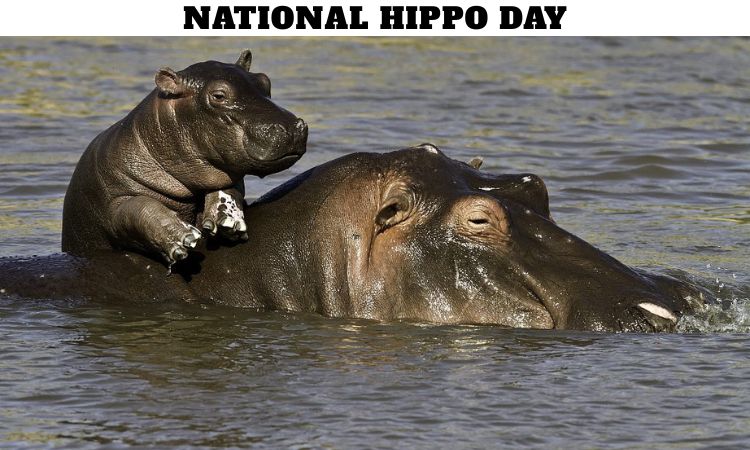
National Hippo Day is celebrated each year on February 15 to honor one of the most fascinating and powerful animals in the animal kingdom—the hippopotamus. Although not an official public holiday, this observance provides an opportunity to learn more about hippos, their habitats, behaviors, ecological importance, and conservation challenges. It is a day for wildlife enthusiasts, educators, conservationists, and animal lovers to appreciate these extraordinary semi-aquatic mammals.
The hippopotamus, often simply called a hippo, is one of the largest land mammals on Earth. Despite their bulky appearance and calm demeanor when resting in water, hippos are incredibly strong and can be surprisingly fast. National Hippo Day encourages people to look beyond stereotypes and understand the true nature of this remarkable species.
What Is a Hippopotamus?
The common hippopotamus, scientifically known as Hippopotamus amphibius, is native to sub-Saharan Africa. The name “hippopotamus” comes from ancient Greek words meaning “river horse,” reflecting the animal’s strong association with water.
Hippos are large, barrel-shaped mammals with thick skin, short legs, and enormous mouths equipped with large tusk-like teeth. Adult males can weigh between 3,000 and 4,000 pounds, while females are slightly smaller. Despite their size, hippos are agile both in water and on land.
There is also a smaller species known as the Choeropsis liberiensis, commonly called the pygmy hippo. Native to West Africa, pygmy hippos are more solitary and spend more time in forested areas than their larger relatives.
Where Do Hippos Live?
Hippos are primarily found in rivers, lakes, and wetlands across sub-Saharan Africa. They spend most of their day submerged in water to keep their bodies cool under the intense African sun. Water also protects their sensitive skin from drying out and cracking.
At night, hippos leave the water to graze on grass. They can travel several miles from their water source in search of food. This daily routine of aquatic resting and nocturnal grazing is a defining characteristic of their behavior.
The pygmy hippopotamus, in contrast, prefers dense forests and swamps in countries such as Liberia and Sierra Leone. Its habitat is more restricted, making it particularly vulnerable to habitat loss.
Why Are Hippos Important to Ecosystems?
Hippos play a vital role in maintaining healthy ecosystems. Their movement between land and water helps transfer nutrients. When hippos graze at night and return to water during the day, their waste enriches aquatic environments with nutrients that support fish and plant life.
This nutrient cycling contributes to biodiversity and supports food chains in African freshwater ecosystems. Hippos also create pathways through vegetation, which other animals use as travel routes.
National Hippo Day highlights the ecological importance of hippos and the need to protect their habitats from environmental threats.
Are Hippos Dangerous?
Despite their often relaxed appearance in water, hippos are considered one of the most dangerous large animals in Africa. They are highly territorial, especially in water, and can become aggressive if they feel threatened.
Hippos can run at speeds of up to 19 miles per hour on land for short distances. Their large jaws can open to nearly 150 degrees, and their powerful bite can cause significant damage.
However, hippos are not inherently aggressive toward humans without reason. Many incidents occur when people unknowingly enter their territory or disturb them. Education and awareness are key to reducing human-wildlife conflict.
How Do Hippos Communicate?
Hippos communicate through a variety of sounds and behaviors. They produce grunts, roars, wheezes, and honks to establish territory and communicate with other members of their group.
Interestingly, hippos can vocalize both above and below water. Their ability to communicate underwater is unique and allows them to stay connected while submerged.
Hippos also use body language, such as yawning displays that reveal their large teeth, to signal dominance or warn potential threats.
What Do Hippos Eat?
Hippos are herbivores. Their diet primarily consists of grasses, and they can consume up to 80 pounds of vegetation in a single night. Although they spend much of their time in water, they do not feed on aquatic plants.
Their grazing habits influence grassland ecosystems by preventing overgrowth and promoting plant diversity. This natural trimming effect benefits other grazing animals that share the habitat.
How Do Hippos Reproduce?
Female hippos typically give birth to a single calf after a gestation period of about eight months. Calves are often born underwater and must quickly surface for their first breath.
Young hippos remain close to their mothers for protection and nourishment. Mothers are highly protective and will defend their calves from predators, including crocodiles and lions.
The strong bond between mother and calf is a notable aspect of hippo behavior and often observed in wildlife documentaries and conservation programs.
What Threats Do Hippos Face?
Although hippos are still relatively widespread, they face increasing threats. Habitat loss due to agriculture, urban expansion, and climate change reduces access to water and grazing areas.
Illegal hunting and poaching for meat and ivory (from their teeth) also pose risks. In some regions, conflict between humans and hippos arises when expanding communities encroach on traditional habitats.
The pygmy hippopotamus is particularly vulnerable and classified as endangered due to habitat destruction and hunting.
Conservation organizations work to protect hippos through habitat preservation, anti-poaching efforts, and community education.
How Is National Hippo Day Celebrated?
National Hippo Day is often celebrated through educational events, wildlife documentaries, zoo activities, and conservation awareness campaigns. Zoos may host special programs highlighting hippo care and conservation efforts.
Teachers and parents can use the day as an opportunity to introduce children to wildlife education. Activities might include reading books about African animals, watching nature documentaries, or learning about ecosystems.
Social media platforms also play a role in spreading awareness, as wildlife organizations share facts, images, and conservation messages.
What Is the Cultural Significance of Hippos?
Hippos have appeared in African folklore and art for centuries. In ancient Egypt, the hippopotamus held symbolic meaning. The goddess Taweret, often depicted with the body of a hippo, represented fertility and protection.
In modern culture, hippos are often portrayed as gentle or humorous characters in children’s stories and cartoons. While these depictions simplify their nature, they contribute to the animal’s popularity and recognition.
How Do Zoos Contribute to Hippo Conservation?
Zoos around the world play a role in conservation by participating in breeding programs and supporting habitat preservation initiatives. They also provide opportunities for people to learn about hippos up close.
Responsible zoos emphasize education about the challenges hippos face in the wild. By fostering appreciation and understanding, they inspire visitors to support conservation efforts.
Why Is Wildlife Awareness Important?
National Hippo Day serves as a reminder of the importance of wildlife conservation. Large animals like hippos often capture public attention, which can translate into broader support for environmental protection.
Preserving hippos means protecting freshwater ecosystems, grasslands, and biodiversity. Conservation efforts not only benefit hippos but also support countless other species.
Raising awareness encourages individuals to make environmentally conscious decisions and advocate for sustainable practices.
What Can Individuals Do to Help?
While hippos live far from many people’s daily lives, individuals can still contribute to conservation efforts. Supporting reputable wildlife organizations, reducing water waste, and promoting environmental education are meaningful actions.
Learning about wildlife and sharing knowledge with others also helps build a culture of conservation. National Hippo Day provides a platform for such awareness.
What Makes Hippos Unique?
Hippos are unique in many ways. They are one of the few large mammals that spend most of their time in water while grazing on land. Their skin secretes a reddish fluid often called “blood sweat,” which acts as a natural sunscreen and antibacterial agent.
Their social structure, aquatic adaptations, and ecological impact make them one of Africa’s most intriguing animals.
Conclusion
National Hippo Day on February 15 is a celebration of one of the most remarkable creatures in the animal kingdom. From their massive size and powerful jaws to their essential role in ecosystems, hippos are far more complex than they may appear.