

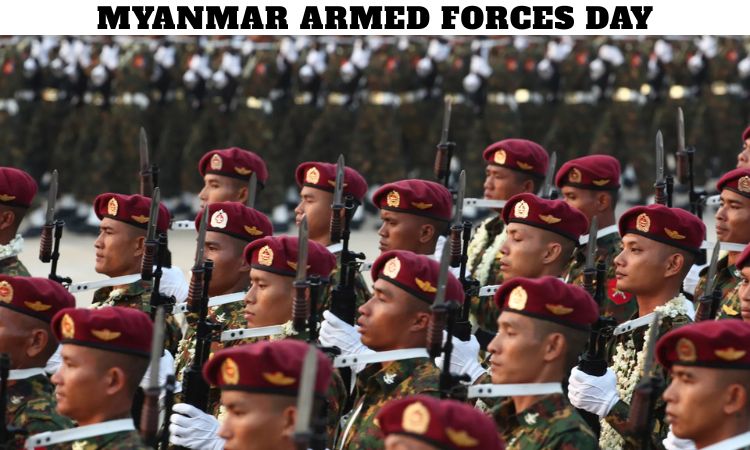
Myanmar Armed Forces Day is observed annually on March 27 in Myanmar. The day commemorates the establishment and historical role of the country’s military forces, known as the Tatmadaw, in shaping the nation’s political and social landscape.
This observance is marked by military parades, official ceremonies, and public events, reflecting both national history and contemporary realities. Myanmar Armed Forces Day remains one of the most prominent national observances, symbolizing themes of sovereignty, defense, and national identity.
Historical Background of Myanmar Armed Forces Day
The origins of Myanmar Armed Forces Day can be traced back to March 27, 1945, when Burmese resistance forces launched a decisive uprising against Japanese occupation during World War II. At the time, nationalist leaders and military units sought to restore independence and establish political autonomy.
Initially known as “Resistance Day,” the observance was later renamed Armed Forces Day to highlight the institutional role of the military in national affairs. This transformation reflected changing political priorities and the evolving influence of the armed forces in Myanmar’s governance.
The Formation of the Tatmadaw
The modern Tatmadaw was established during the early 1940s as nationalist groups organized to resist colonial rule and foreign occupation. Influential leaders, including Aung San, played crucial roles in forming military units aimed at securing independence.
Following independence from the United Kingdom in 1948, the armed forces continued to expand in structure and responsibility. Over the decades, the Tatmadaw became deeply involved in national administration, security operations, and political decision-making.
How is Myanmar Armed Forces Day observed?
Military Parades and Ceremonies
The most visible feature of Myanmar Armed Forces Day is the grand military parade held in the capital, Naypyidaw. These events showcase military equipment, personnel formations, and aerial displays. High-ranking officials deliver speeches emphasizing patriotism, discipline, and national unity.
Public Events and Cultural Programs
Beyond official ceremonies, some communities organize cultural performances, exhibitions, and educational programs that explore Myanmar’s military history. Schools and institutions may conduct discussions or activities related to national defense and historical milestones.
Media Coverage and National Messaging
State media typically broadcast extensive coverage of Armed Forces Day events, highlighting the armed forces’ contributions and promoting themes of stability and sovereignty.
Political and Social Significance
Myanmar Armed Forces Day holds substantial political significance, as it reflects the military’s long-standing influence in governance. Throughout Myanmar’s modern history, the Tatmadaw has played a central role in shaping domestic policies and responding to internal conflicts.
For supporters, the day represents dedication to national security and territorial integrity. For others, it is associated with debates about civil-military relations and democratic development. These differing perspectives contribute to the observance’s complex meaning in contemporary society.
International Perspectives and Diplomatic Context
International reactions to Myanmar Armed Forces Day vary widely. Some countries send diplomatic representatives to attend ceremonies, while others monitor developments through official statements or media analysis.
The observance often becomes a focal point for discussions about regional stability, human rights, and geopolitical relations in Southeast Asia. This global attention underscores Myanmar’s strategic importance and the broader implications of its internal dynamics.
Economic and Institutional Role of the Armed Forces
Beyond defense responsibilities, the Tatmadaw has historically been involved in economic enterprises and infrastructure projects. Military-linked organizations have contributed to transportation development, resource management, and public works.
Supporters argue that these initiatives enhance national resilience, while critics emphasize the need for transparent governance and balanced civilian participation. Armed Forces Day thus provides an opportunity to reflect on the intersection of military, economic, and societal roles.
Educational and Historical Awareness
Myanmar Armed Forces Day also encourages reflection on the country’s struggle for independence and post-independence challenges. Museums, archives, and educational institutions may highlight historical narratives related to wartime resistance and nation-building efforts.
Such initiatives help younger generations understand the complexities of Myanmar’s past, fostering informed perspectives about national identity and future aspirations.
Cultural Expressions and Public Sentiment
Public sentiment surrounding Armed Forces Day can vary across regions and communities. While some citizens participate enthusiastically in patriotic celebrations, others observe the day more quietly or engage in discussions about national reforms.
Artistic expressions, including music, literature, and visual arts, sometimes explore themes related to military history, sacrifice, and social transformation. These cultural dimensions add depth to the observance, reflecting diverse viewpoints within Myanmar society.
The Contemporary Relevance of Myanmar Armed Forces Day
In recent years, Myanmar Armed Forces Day has gained heightened global attention due to ongoing political developments. Analysts and observers often use the occasion to assess shifts in policy direction, leadership priorities, and public engagement.
Despite differing interpretations, the day remains a significant milestone in Myanmar’s national calendar. It continues to symbolize both historical achievements and ongoing challenges, reminding citizens and international audiences of the country’s evolving journey.
Conclusion
Myanmar Armed Forces Day on March 27 represents a multifaceted observance rooted in wartime resistance, national independence, and institutional transformation. Through parades, ceremonies, and public discourse, the day highlights the enduring influence of the Tatmadaw in shaping Myanmar’s past and present.
Frequently Asked Questions (FAQs)
1. What is Myanmar Armed Forces Day?
It is a national observance on March 27 commemorating the role and history of Myanmar’s armed forces.
2. Why is Myanmar Armed Forces Day celebrated on March 27?
The date marks the 1945 uprising against Japanese occupation during World War II.
3. What was Myanmar Armed Forces Day originally called?
It was initially known as Resistance Day.
4. Who founded the modern Myanmar armed forces?
Nationalist leaders, including Aung San, played key roles in forming military units.
5. Where are major celebrations held?
Grand ceremonies are typically held in Naypyidaw, the capital of Myanmar.
6. What activities take place on Armed Forces Day?
Military parades, speeches, cultural events, and media broadcasts are common.
7. Is Myanmar Armed Forces Day a public holiday?
Yes, it is recognized nationally, though observance may vary.
8. How does the international community respond to the day?
Responses vary from diplomatic attendance to critical commentary.
9. What role does the Tatmadaw play in Myanmar?
The Tatmadaw is responsible for national defense and has historically influenced governance.
10. Why is the day considered significant today?
It reflects Myanmar’s historical struggles and ongoing political developments.