

Why Is Kiribati Independence Day Celebrated on July 12?
Kiribati Independence Day is celebrated every year on July 12 to commemorate the country’s independence from British colonial rule in 1979. This national day represents freedom, national identity, cultural pride, and the determination of the people of Kiribati to govern themselves. The celebration is one of the most important occasions in the country, bringing together communities across the islands to honor their history, traditions, and achievements.
Kiribati, a Pacific island nation located near the equator, consists of 33 islands grouped into three main island groups: the Gilbert Islands, the Phoenix Islands, and the Line Islands. Before gaining independence, the islands were administered by the British Empire as part of the Gilbert and Ellice Islands Colony. Over many years, the people of Kiribati developed a strong sense of identity and worked toward achieving self-governance.
On July 12, 1979, Kiribati officially became an independent republic. The day marked the end of colonial administration and the beginning of a new chapter in the nation’s history. Since then, Kiribati Independence Day has been celebrated annually with ceremonies, cultural performances, sports competitions, and community gatherings that highlight the country’s unique heritage.
What Is the History Behind Kiribati Independence Day?
The history of Kiribati Independence Day is closely connected to the colonial period and the political development of the Pacific region. During the late 19th century, the British Empire expanded its influence in the Pacific and established control over the Gilbert Islands. In 1892, the Gilbert Islands became a British protectorate, and later they were combined with the Ellice Islands to form the Gilbert and Ellice Islands Colony in 1916.
The islands experienced significant changes during British administration, including the introduction of new political systems, economic activities, and social structures. However, the people of the islands maintained their traditional customs, languages, and community-based way of life.
During the 1970s, political movements supporting independence became stronger throughout the Pacific. The people of the Gilbert Islands began advocating for greater control over their own affairs. In 1975, the Gilbert and Ellice Islands Colony was divided into two separate territories. The Ellice Islands later became Tuvalu, while the Gilbert Islands continued their path toward independence as Kiribati.
After years of political discussions and preparations, Kiribati gained full independence on July 12, 1979. The country adopted a new constitution and established itself as a sovereign nation. The date was chosen to coincide with the lowering of the British flag and the raising of the Kiribati flag, symbolizing the transition from colonial rule to independence.
Why Is Kiribati Independence Day Important for the People?
Kiribati Independence Day holds deep significance for the people because it represents freedom, unity, and national pride. The day reminds citizens of the struggles and efforts made by previous generations to achieve independence. It also celebrates the preservation of Kiribati’s culture, traditions, and identity.
For many people in Kiribati, independence is not only about political freedom but also about protecting their unique way of life. The country has a rich cultural heritage based on community cooperation, traditional knowledge, fishing practices, music, dance, and storytelling. Independence Day provides an opportunity for people to celebrate these traditions and pass them on to younger generations.
The celebration also encourages national unity among the islands. Although Kiribati is spread across a large area of the Pacific Ocean, Independence Day brings people together with a shared sense of belonging. Communities organize events where families, friends, and leaders participate in activities that strengthen social connections.
How Do People Celebrate Kiribati Independence Day?
Kiribati Independence Day is celebrated with a variety of events and activities throughout the country. The celebrations usually include official government ceremonies, cultural performances, traditional dances, sports competitions, and community gatherings.
One of the most important parts of the celebration is the official flag-raising ceremony. Government officials, community leaders, and citizens gather to honor the country’s independence and reflect on its journey as a nation. Speeches are often delivered to recognize national achievements and discuss the future of Kiribati.
Cultural activities are a major part of Independence Day celebrations. Traditional music, dancing, and performances showcase the heritage of Kiribati. Local groups perform traditional dances that tell stories about the islands, history, and values of the people. These performances help preserve cultural traditions and educate younger generations.
Sports events are also popular during Independence Day celebrations. Activities such as canoe racing, volleyball, soccer, and traditional games bring communities together in a spirit of friendship and competition. Food plays an important role as well, with families preparing traditional dishes and sharing meals during gatherings.
What Does the Kiribati Flag Represent on Independence Day?
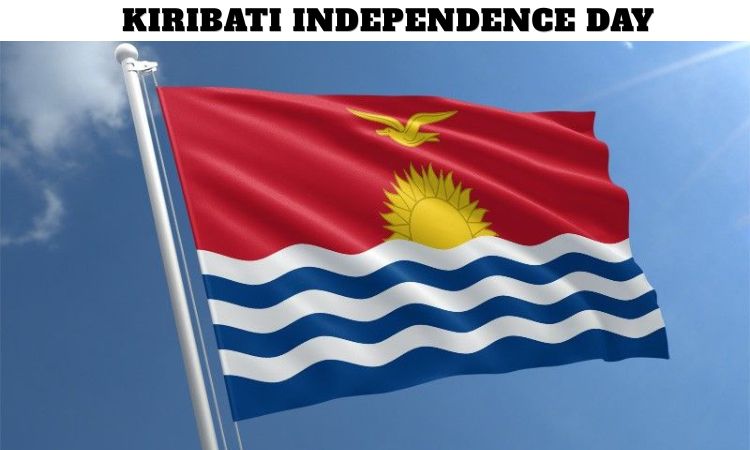
The Kiribati flag is an important symbol during Independence Day celebrations. It represents the nation’s identity, history, and connection to the Pacific Ocean. The flag features a red upper section with a golden frigatebird flying above a rising sun, along with blue and white waves below.
The frigatebird represents strength, freedom, and the ability to navigate across the vast Pacific Ocean. The rising sun represents Kiribati’s location near the equator and symbolizes a new beginning. The waves represent the Pacific Ocean, which surrounds the islands and plays a central role in the lives of the people.
During Independence Day, the national flag is displayed throughout communities, government buildings, and homes. It serves as a reminder of the country’s independence and the pride citizens have in their national heritage.
How Has Kiribati Developed Since Gaining Independence?
Since independence in 1979, Kiribati has worked to develop its economy, infrastructure, education system, and public services. As a small island nation, the country faces unique challenges, including limited natural resources, geographic isolation, and vulnerability to climate change.
Kiribati’s economy has traditionally depended on fishing, agriculture, and marine resources. The government has also focused on developing tourism and sustainable economic opportunities to support future growth. The country’s large exclusive economic zone in the Pacific Ocean provides valuable fishing resources that contribute significantly to the economy.
Education and healthcare improvements have also been important areas of development. The government has worked to expand access to schools and medical services across the islands. International partnerships have supported projects related to infrastructure, environmental protection, and climate resilience.
Despite challenges, Kiribati continues to maintain its cultural identity and strengthen its role as an independent nation. Independence Day serves as a reminder of the progress made and the goals ahead.
Why Is Climate Change Important During Kiribati Independence Celebrations?
Climate change is one of the most significant issues facing Kiribati today. Because many of its islands are low-lying, the country is highly vulnerable to rising sea levels, coastal erosion, and changing weather patterns. Independence Day celebrations often include discussions about protecting the environment and ensuring a sustainable future for future generations.
The people of Kiribati have become international voices in raising awareness about climate change impacts on small island nations. The country continues to advocate for global action to reduce emissions and protect vulnerable communities.
While Independence Day is a celebration of national achievements, it is also a time to recognize challenges and promote cooperation. The resilience of the people of Kiribati reflects their commitment to protecting their homeland and preserving their culture.
What Are Some Interesting Facts About Kiribati Independence Day?
Kiribati Independence Day is celebrated on July 12 every year, marking the date the nation became independent in 1979. Kiribati was formerly known as the Gilbert Islands before independence. The country is one of the few nations in the world that extends across all four hemispheres because of the location of its islands.
The capital city of Kiribati is South Tarawa, which is located on a narrow coral atoll. The country is famous for its marine biodiversity, traditional navigation knowledge, and strong community values. Kiribati also played an important role during World War II because of its strategic location in the Pacific.
The national holiday allows citizens to celebrate not only independence but also the unique culture and history that make Kiribati special.
How Can People Learn More About Kiribati Independence Day?
People can learn more about Kiribati Independence Day by exploring the country’s history, culture, traditions, and modern challenges. Understanding the significance of July 12 helps highlight the experiences of small island nations and their contributions to global culture.
Schools, cultural organizations, and communities often share information about Kiribati’s journey toward independence. Learning about the holiday also provides insight into the importance of self-determination, cultural preservation, and environmental responsibility.
Kiribati Independence Day is more than a national celebration. It represents the strength, resilience, and unity of a nation that continues to protect its identity while facing the challenges of the modern world.
Frequently Asked Questions (FAQs)
1. When is Kiribati Independence Day celebrated?
Kiribati Independence Day is celebrated every year on July 12.
2. Why does Kiribati celebrate Independence Day on July 12?
Kiribati celebrates Independence Day on July 12 because it gained independence from British colonial rule on July 12, 1979.
3. Which country did Kiribati gain independence from?
Kiribati gained independence from the United Kingdom after being part of the British-administered Gilbert and Ellice Islands Colony.
4. What year did Kiribati become independent?
Kiribati became an independent nation in 1979.
5. How do people celebrate Kiribati Independence Day?
People celebrate with official ceremonies, cultural performances, traditional dances, sports events, and community gatherings.
6. What is the capital of Kiribati?
The capital city of Kiribati is South Tarawa.
7. What does the Kiribati flag symbolize?
The Kiribati flag symbolizes freedom, the Pacific Ocean, the country’s location near the equator, and national identity.
8. What was Kiribati called before independence?
Before independence, Kiribati was known as the Gilbert Islands and was part of the Gilbert and Ellice Islands Colony.
9. Why is Kiribati important in discussions about climate change?
Kiribati is highly vulnerable to rising sea levels and climate change because many of its islands are low-lying.
10. Is Kiribati Independence Day a public holiday?
Yes, Kiribati Independence Day is a national public holiday celebrated throughout the country.